

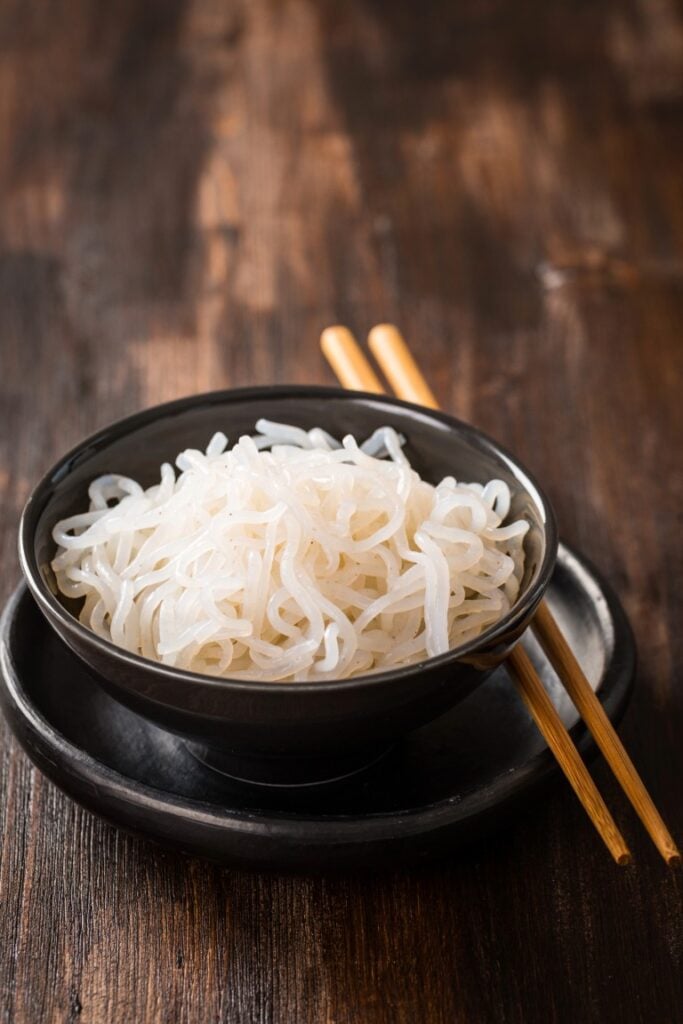
The best vegetarian keto pasta depends on the dish: konjac noodles when you want something light in a broth or a stir-fry, and lupin or soya pasta when you want a bowl that eats like a proper plate of pasta. ‘Keto pasta’ is not one product but a small family of meat-free alternatives, each with its own texture, cooking method and nutritional profile. None of them behaves exactly like wheat pasta, and that is good to know before the pan is even on the hob.
What Counts As Keto Pasta
Keto pasta is any pasta substitute with a low net carb count per serving, and that single number on the nutrition panel is what separates it from ordinary dried pasta. The shape, the colour and the word on the front of the pack matter far less.
On a UK label, the carbohydrate line already excludes fibre, so the figure you read there is close to what keto cooks call net carbs. Wheat pasta is mostly starch. The alternatives swap that starch for something else, and what they swap it for decides how they cook.
There are three broad families on the shelf. The first is konjac, the translucent shirataki-style noodles made from the root of the konjac plant, sold wet in a pouch of liquid. The second is bean and legume pasta, made from lupin flour, soya flour or a blend, and sold dry like any packet of penne. The third is vegetable noodles: courgette ribbons, spiralised squash or thin strips of carrot, which you can make at home with a peeler.
All three are naturally meat-free, which makes them an easy fit for a vegetarian kitchen that already leans on pulses and tofu. The differences show up once you start cooking.
Konjac, Lupin And Soya Noodles Compared
Konjac and legume pasta sit at opposite ends of the low-carb shelf. Konjac noodles are mostly water held together by a fibre called glucomannan, so they carry very few calories and next to no net carbs. Lupin and soya pasta are dense and dry, much higher in protein and fibre, and far closer to wheat pasta once cooked.
Brands such as BeKeto sell konjac and a dense, protein-rich dry pasta side by side. Its organic konjac fettuccine and spaghetti come in 320g packs at 6 kcal and 1.3g net carbs per 100g, while its dry keto pasta in linguine and penne shapes lists 4.9g net carbs per serving and cooks to al dente in 8 minutes. Read the nutrition panel before you pick a sauce, because the two behave nothing alike in the pan.
Konjac has a springy, slightly bouncy bite. It tastes of very little on its own, which means it takes on whatever you cook it with. Straight out of the pouch it has a faint smell from the liquid it is packed in, and that smell goes once the noodles are rinsed. It never goes soft like overcooked spaghetti, but it can turn rubbery if you skip the preparation.
Lupin pasta is made by milling lupin beans into flour and pressing the dough into shapes. It has a faintly nutty, beany flavour and a firm bite. Soya pasta, whether made from yellow soya beans, black soya beans or edamame, has a similar texture, a slightly earthier taste and often a darker colour. Both absorb water as they cook, just as wheat pasta does, so they hold on to a sauce rather than sitting in it.
BeKeto’s dry linguine and penne sit in that dense camp too, listing 36g of protein and 29g of fibre per 100g, which shows how far this style is from konjac on paper. As a rough guide, reach for konjac when you want something light in a broth or a stir-fry, and for legume pasta when you want a bowl that eats like a proper plate of pasta.
How To Cook Low-carb Pasta So It Does Not Turn Gluggy
Each style has its own method, and the mistakes are different too. Konjac goes wrong when it stays wet. Lupin and soya shapes go wrong when they cook too long.
For konjac, tip the pouch into a sieve and rinse under cold running water for a minute or two, moving the noodles around with your fingers. Blanch them in a pan of boiling water for about 2 to 3 minutes. Drain well, then put them in a dry non-stick frying pan over a medium heat with no oil. Keep them moving for 3 to 4 minutes until they stop steaming and start to squeak against the pan. This dry-frying step firms up the texture and drives off surface water, so the sauce clings instead of sliding off. If the strands are very long, snip them with kitchen scissors first.
A 320g pouch of BeKeto konjac spaghetti, drained and dry-fried, makes two light portions alongside plenty of vegetables.
For lupin and soya pasta, bring a large pan of well-salted water to a rolling boil. Stir during the first minute so the pieces do not stick together. Start tasting a minute or two before the time on the pack. BeKeto gives 8 minutes for its dry shapes and other brands vary, so treat the packet time as a ceiling rather than a target.
Drain while the pasta still has a little resistance in the middle. Keep a mug of the cooking water back, as it loosens a sauce without diluting the flavour. There is no need to rinse legume pasta. Toss it straight into the sauce and let it finish there for 30 seconds.
Vegetarian Sauces That Work With Low-carb Pasta
The right sauce depends on which pasta you chose. Konjac likes thin, bright sauces it can soak up. Legume pasta can carry rich, creamy ones.
A light tomato sauce is the easiest match for konjac. Soften a sliced clove of garlic in olive oil, add a tin of chopped tomatoes, a pinch of chilli flakes and a few torn basil leaves, and simmer for 15 minutes. Toss dry-fried konjac through it for a final minute so it picks up the colour and the flavour. Flat fettuccine, such as the BeKeto one, holds more of the sauce than thin spaghetti.
Creamy sauces belong with the denser shapes. A tahini sauce is quick: whisk 2 tablespoons of tahini with the juice of half a lemon, a grated garlic clove and enough warm pasta water to make it pourable. For a cashew version, soak a handful of cashews in boiling water for 15 minutes, then blend with nutritional yeast, garlic and a splash of the cooking water until smooth.
Pesto adds contrast, and it works with both styles. Blitz basil or rocket with toasted pine nuts or hazelnuts, olive oil, lemon zest and a vegetarian hard cheese. Traditional Parmigiano Reggiano is made with animal rennet, so check the label if you want the dish to stay vegetarian.
Roasted vegetables give the bowl body: courgette, aubergine, red peppers and mushrooms, roasted hot until they catch at the edges.
Swapping Regular Pasta For Keto Pasta In Your Usual Recipes
Most everyday vegetarian pasta recipes adapt well, as long as you match the style of pasta to the dish.
Does it taste different? Yes. Lupin and soya pasta have a nutty, beany note that a bold sauce covers well, while konjac tastes of almost nothing and relies on the sauce entirely.
Does it work in a bake? Legume pasta does, provided you undercook it by a couple of minutes first, because it keeps absorbing liquid in the oven. Konjac is less suited to a pasta bake, as it does not soften or bind with the sauce in the same way.
How much should you cook per person? Weigh legume pasta dry and follow the serving size printed on the pack, since the net carb figure is calculated per serving. Konjac is sold wet and its drained weight varies, so judge it by the plate. A lentil bolognese or a leek and mushroom sauce stretches either kind further.
The BeKeto range is only one option on the shelf, and the same checks apply to any low-carb pasta you pick up. Read the panel, then follow the cooking method for that style.
Have you tried konjac or lupin pasta in your own kitchen? Tell me in the comments which sauce you paired it with.
Other Things You Might Like



Leave a Reply