

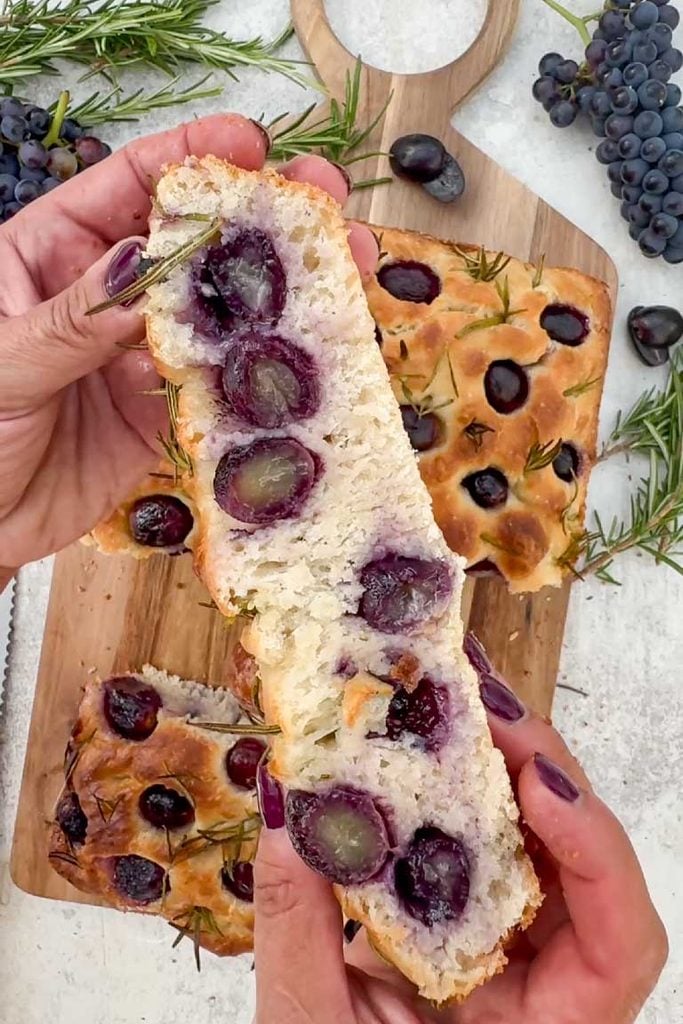
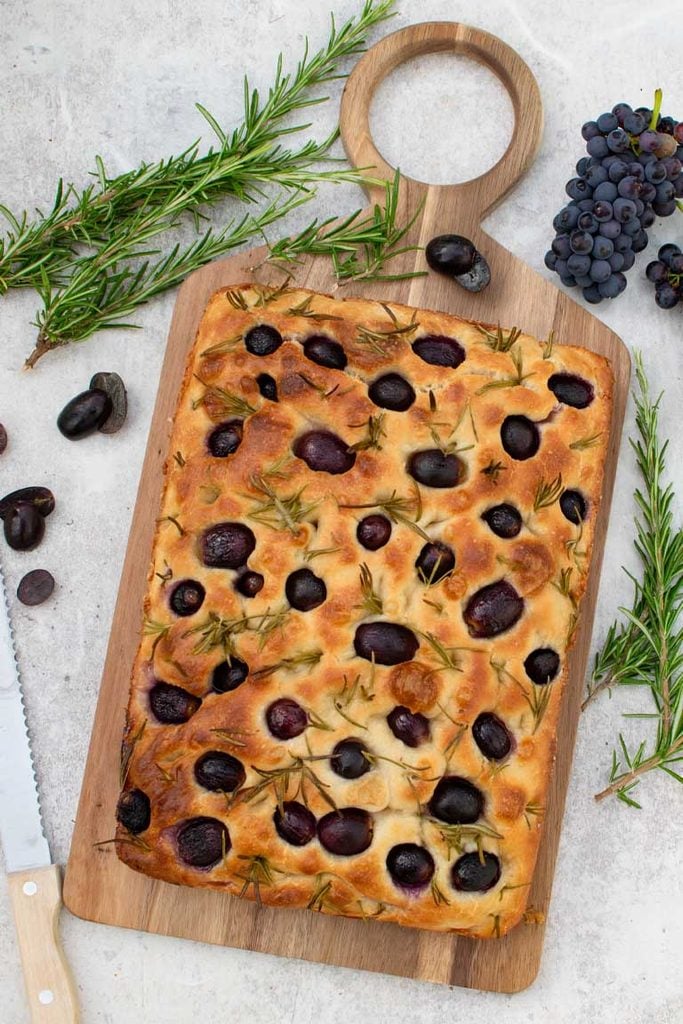
A pillowy, olive-oil-rich focaccia layered and topped with juicy black or red grapes and fresh rosemary, inspired by the Tuscan tradition of schiacciata con l’uva. Sweet, savoury, and the perfect way to use up a homegrown grape glut at the end of summer.
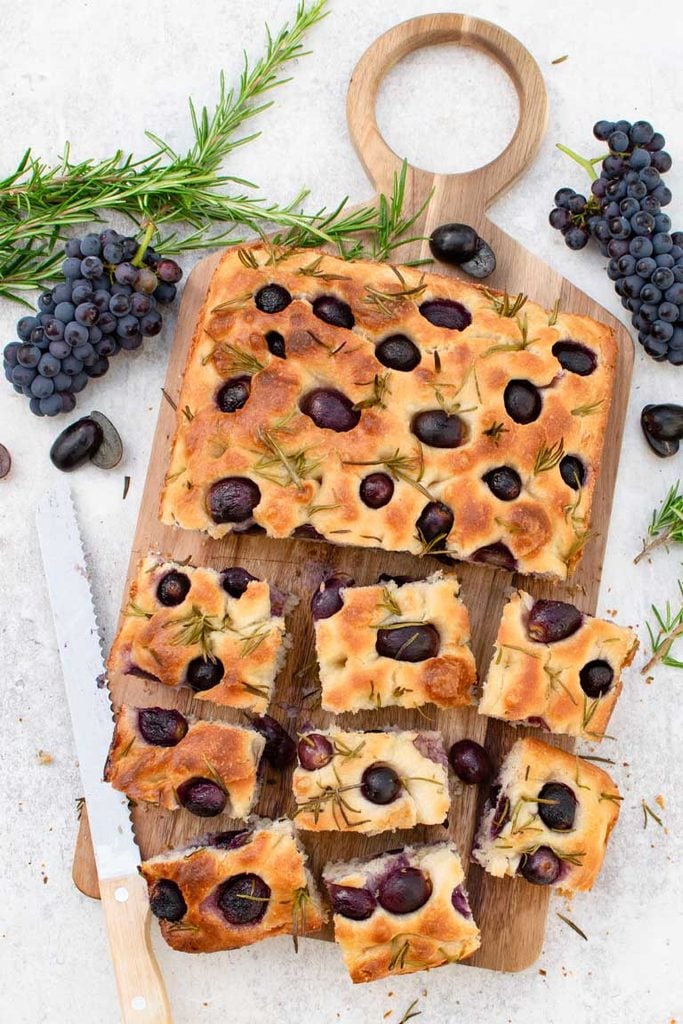
Grape Focaccia (Schiacciata con l’Uva) with Rosemary
If like me, you’re growing your own grapes, you do know my seasonal dilemma well: the vine delivers far more fruit than we can eat fresh, and there are only so many jars of grape jelly one household needs. This grape focaccia is my answer to that lovely problem. It’s a soft, olive-oil-rich Italian bread studded with juicy black (or red) grapes and scattered with fresh rosemary. A great harvest recipe that makes a real feature of a glut that would otherwise head straight into the jam pan.
Alongside my Grape Jelly recipe, this is a proper end-of-summer, early-autumn bake, timed to make the most of grapes just as they ripen. I’ve used rosemary straight from my own garden here too, which makes all the difference to the fragrance. Small grapes with seeds work beautifully in the traditional style, but I also love using slightly bigger, juicier ones, so whatever your vine (or greengrocer) gives you, this recipe will make good use of it.
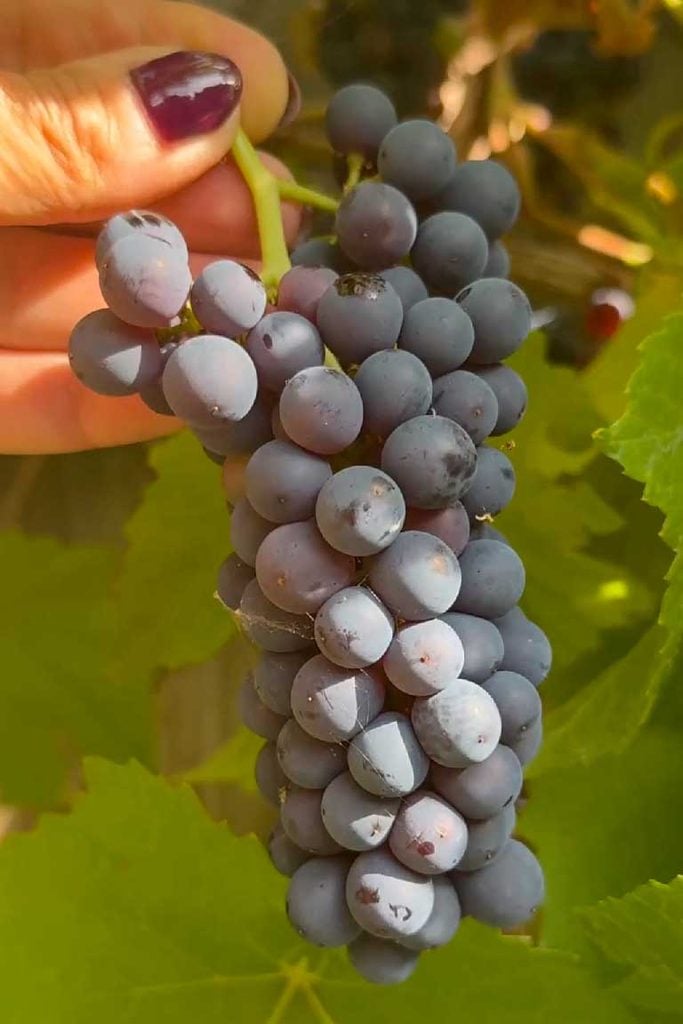
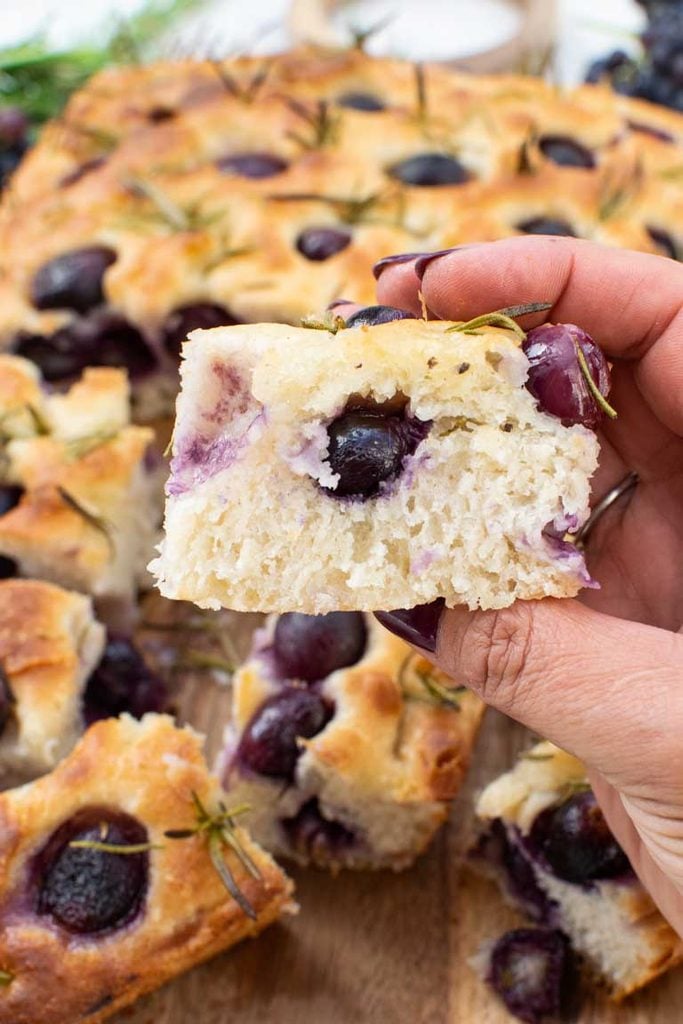
It’s a different method to my Focaccia Bread with Rosemary, which is an overnight single-layer dough. And it is also a different method than the traditional “schiacciata con l’uva”. I like to split the dough in two and sandwich the grapes between the layers as well as scattered on top, so every bite gets a burst of sweetness alongside the classic crisp, olive-oil base.
The result is a savoury but slightly sweet bread that is just as at home on an antipasti sharing board or alongside cheese or salad as it is on its own with a cup of tea. And good extra-virgin olive oil is non-negotiable: it flavours the dough, keeps the crumb moist, and is what gives grape focaccia its signature crisp base, so use the best one you can afford.
The Origins of Grape Focaccia
Grape focaccia has a long history in Tuscany, where it’s known as schiacciata con l’uva, or schiacciata all’uva. The two names are used interchangeably. Some food historians trace its roots back as far as the Etruscans, who are said to have made an early version of this wheat-and-grape bread to mark the season.
More recently, it became strongly associated with the vendemmia, the annual wine grape harvest around Florence, Prato and the Chianti hills. That’s why it’s sometimes still called “winemakers’ focaccia”.
For flavour and texture, traditional versions leave the seeds in the grapes. My version keeps things simple and UK-kitchen-friendly, using whatever black or red grapes you have to hand, seeded or not, while keeping the same spirit: a rustic bread that celebrates the last of the season’s fruit.
How I Love Using My Kenwood Cooking Chef XL for This Recipe
This is exactly the kind of dough where my Kenwood Cooking Chef XL earns its worktop space. The integrated EasyWeigh scale means I can weigh the flour, yeast, and salt directly into the bowl, which cuts down on washing up and makes it much easier to get the ratios right, especially with a wetter, higher-hydration dough like this one.
The feature I use most, though, is the induction plate. It lets you warm the bowl to a gentle, consistent temperature while the dough proves, which takes all the guesswork out of finding a suitably warm spot in the kitchen. If you’re using the Cooking Chef XL, cover the bowl with the splashguard and set the induction plate to around 30°C for the first prove; it makes for a much more reliable rise than balancing the bowl near a radiator or in an airing cupboard.
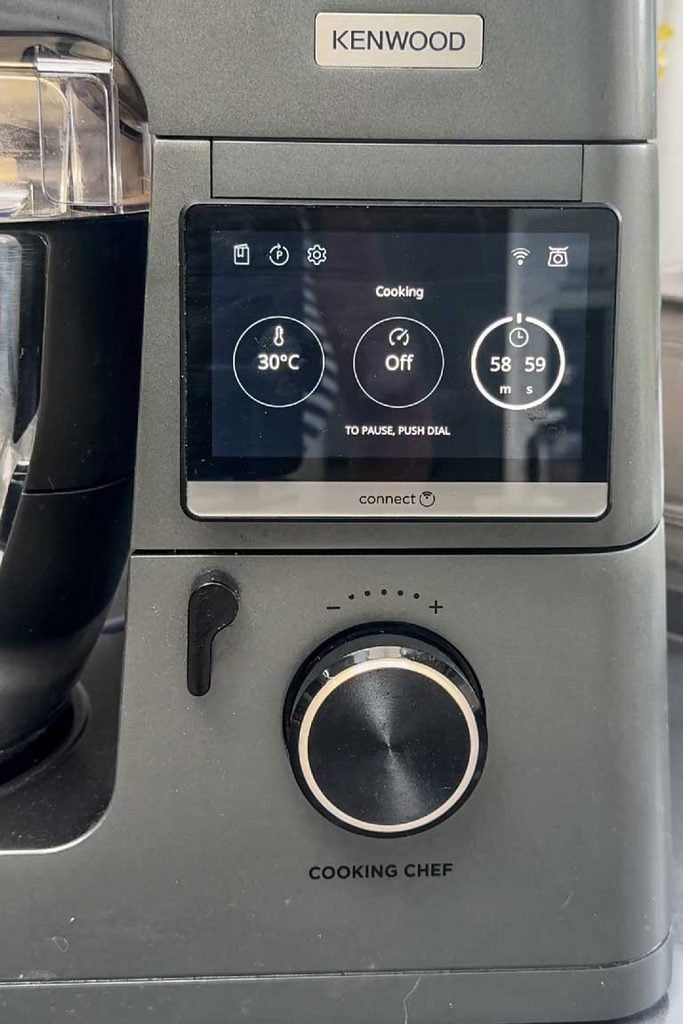
This matters more than people expect for a seasonal, end-of-summer bake like this one, when UK kitchens can already be turning cold and unpredictable. With the Cooking Chef XL doing the proving, I get the same good rise whether I’m baking in August or October, which is a big part of why this has become such a reliable go-to at grape season.
I’ve written a full buyer’s guide (and special readers’ offer) for the Kenwood Cooking Chef XL, which you can read here, if you’re weighing up whether it’s worth the investment.
Other Bread Recipes To Try:
Watch How To Make Grape Focaccia
Why You’ll Love This Recipe
- A brilliant use for a grape glut.
- Genuinely seasonal. Timed for the UK grape harvest in September and October, it’s a proper end-of-summer, early-autumn bake.
- Sweet and savoury in one bake. The grapes bring jammy sweetness against a salty, olive-oil-rich crumb, so it works equally well on its own, on an antipasti board, or alongside cheese.
- No-fail proving. If you’re using a stand mixer with a heated bowl, such as the Kenwood Cooking Chef XL, you get a steady, reliable rise even in a cold kitchen.
- A different technique to try. Sandwiching half of the grapes between two layers of dough (rather than just scattering all of them on top) gives a fruitier result.
- Straightforward, storecupboard method. No starter, no overnight prove. Just flour, yeast, olive oil, grapes and rosemary, ready in an afternoon.
Ingredient Notes
- Strong white bread flour: has a higher protein content than plain flour, which builds more gluten and gives focaccia its characteristic chewy, open texture. Plain flour will work in a pinch, but the result won’t be quite as satisfying.
- Fast-action dried yeast: goes straight into the dry ingredients, with no need to activate it separately first. Just keep it on the opposite side of the bowl from the salt before mixing, as direct contact can “kill” the yeast.
- Sugar: sweeten the bread slightly and gives the yeast a little help getting started.
- Extra-virgin olive oil: non-negotiable here. It flavours the dough, keeps the crumb moist, and creates the signature crispy base as it bakes. Use the best quality you can afford.
- Grapes: traditionally, small black or red grapes are used, even the ones with seeds. I also like slightly bigger grapes, which tend to be juicier. If you’re growing your own, this is a lovely way to use grapes that are a little too small or imperfect for eating fresh.
- Fresh rosemary: gives a far more vibrant, fragrant result than dried. If you’re picking it straight from the garden, choose the newer, softer growth for best flavour.
Step-by-step Instructions
Step 1: Make and knead the dough
Start by adding the flour, yeast, sugar and salt to a large mixing bowl or food processor, keeping the yeast and salt on opposite sides of the bowl as you tip them in. They can inhibit each other if they touch directly, so keep them apart before stirring the dry ingredients together.
If you’re using a food processor, fit the dough hook and set it to medium-low speed, then gradually pour in the water followed by 2 tablespoons of the olive oil, mixing until a slightly sticky dough comes together.
If you’re working by hand, make a well in the centre of the dry ingredients instead, then gradually add the water and 2 tablespoons of olive oil, mixing with a wooden spoon or your hands until you have that same slightly sticky dough.
From here, knead until the dough turns soft and smooth: about 5 minutes with a food processor, or 10 minutes by hand on a lightly floured surface. Don’t be tempted to add extra flour to compensate; the dough should still feel a little sticky even once it’s ready.
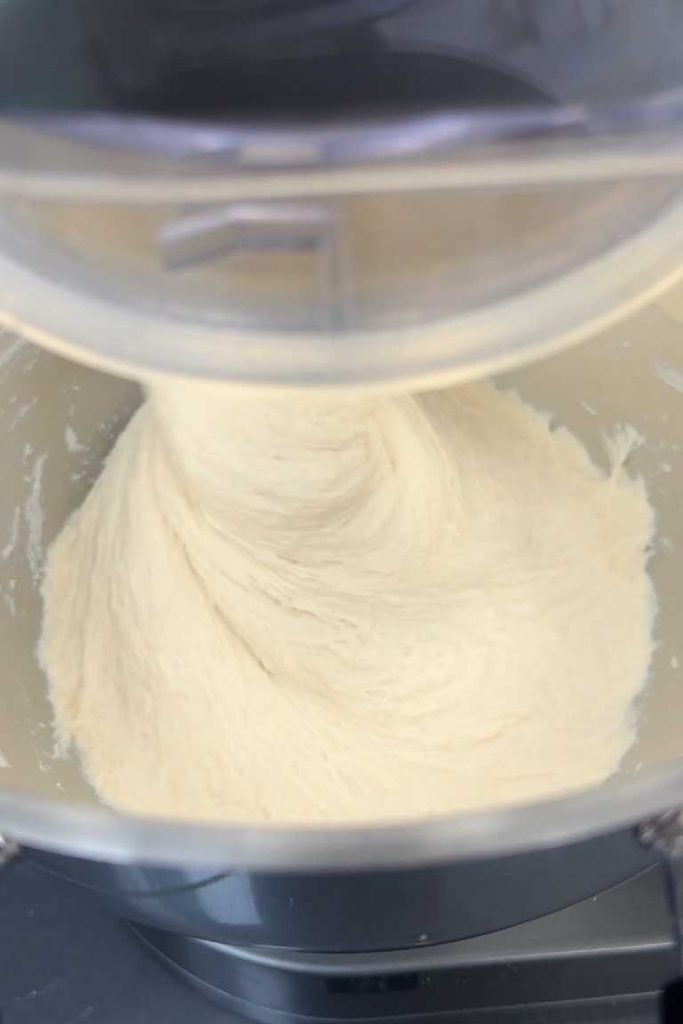
Step 2: First rise
Once the dough is kneaded, drizzle it with a tablespoon of olive oil and leave it to rise in a bowl covered for about an hour, until it’s doubled in size. If you’re using the Kenwood Cooking Chef XL, this is foolproof, cover the bowl with the splashguard and warm it to 30°C using the induction plate, so the dough gets a steady, gentle rise no matter how cold the kitchen is.
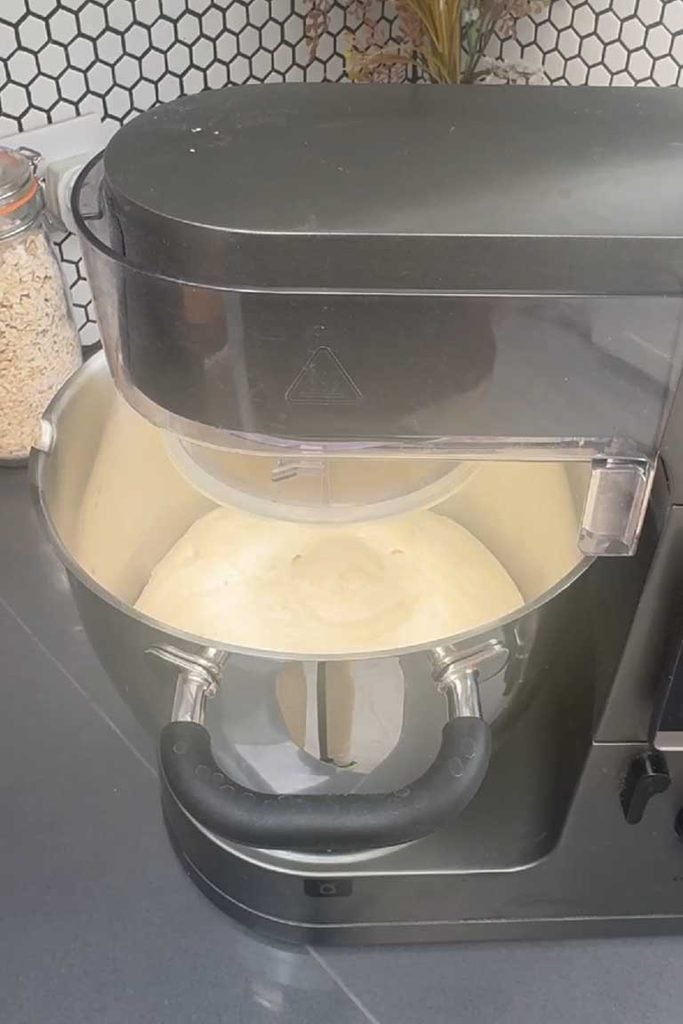
Step 3: Assemble in the tin
While the dough rises, brush an ovenproof dish (approx. 35 x 23 x 6 cm) with olive oil. If your dish isn’t non-stick, swap the oil for butter or a dairy-free spread instead, so the focaccia releases cleanly once it’s baked.
Once the dough has doubled, gather it into a ball with oiled hands, then split it in half. Stretch the first half into the dish, working it right out to the edges until it covers the base completely. Scatter half of the grapes evenly over the top, then shape the second half of the dough into a rough rectangle and lay it neatly over the grapes, sandwiching them between the two layers.
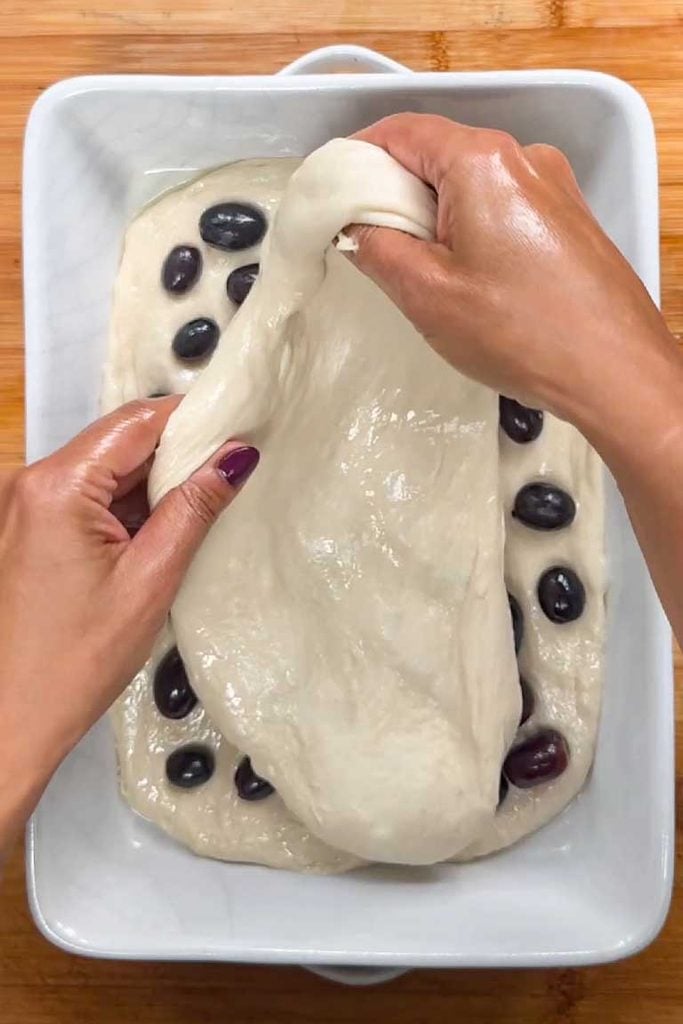
Step 4: Second rise
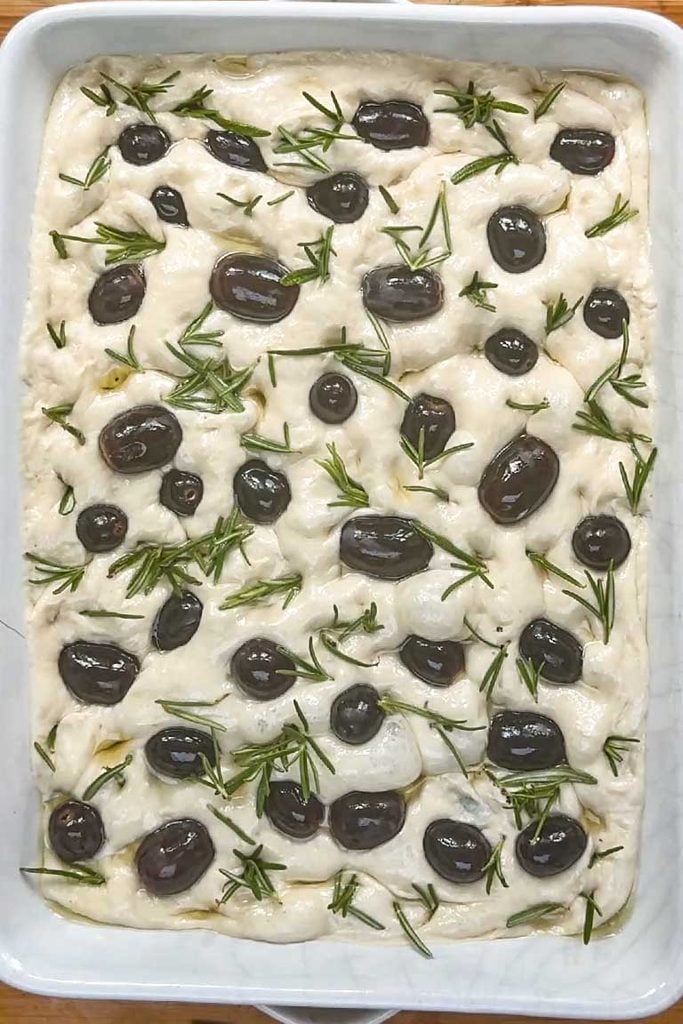
Cover the dish and leave it to rise in a warm spot for another hour, until doubled in size again. You’ll know it’s ready when it looks puffy and bubbly, wobbles like jelly when you give the dish a gentle shake, and has spread to mostly fill the tin.
Step 5: Bake and finish
While the dough has its second rise, preheat the oven to 220°C (425°F). Once it’s ready, drizzle 2 tablespoons of olive oil over the top and press your fingers deep into the dough to create dimples all over. This is what gives focaccia its signature texture and helps the oil pool and soak in as it bakes. Scatter over the remaining grapes and the rosemary leaves, pressing them gently into the dough so they hold in place.
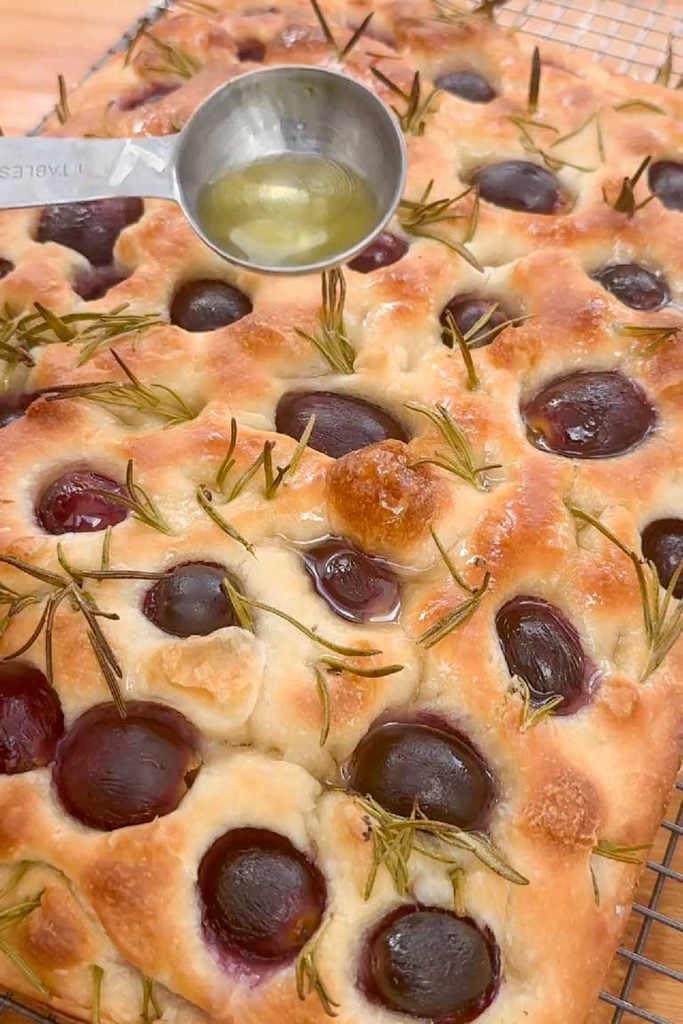
Bake for 25–30 minutes, until deeply golden. Let it cool in the tray for a couple of minutes, then transfer it to a wire rack. While it’s still hot, drizzle over a tablespoon of olive oil to give the focaccia a glossy finish. Leave to cool for 15 minutes before serving.
Serving Suggestions
This grape focaccia is easy-going about how it’s served, which is part of why I make it so often at this time of year. Warm from the oven with just that final drizzle of olive oil, it really needs nothing else, but there are plenty of ways to build a meal or a spread around it.
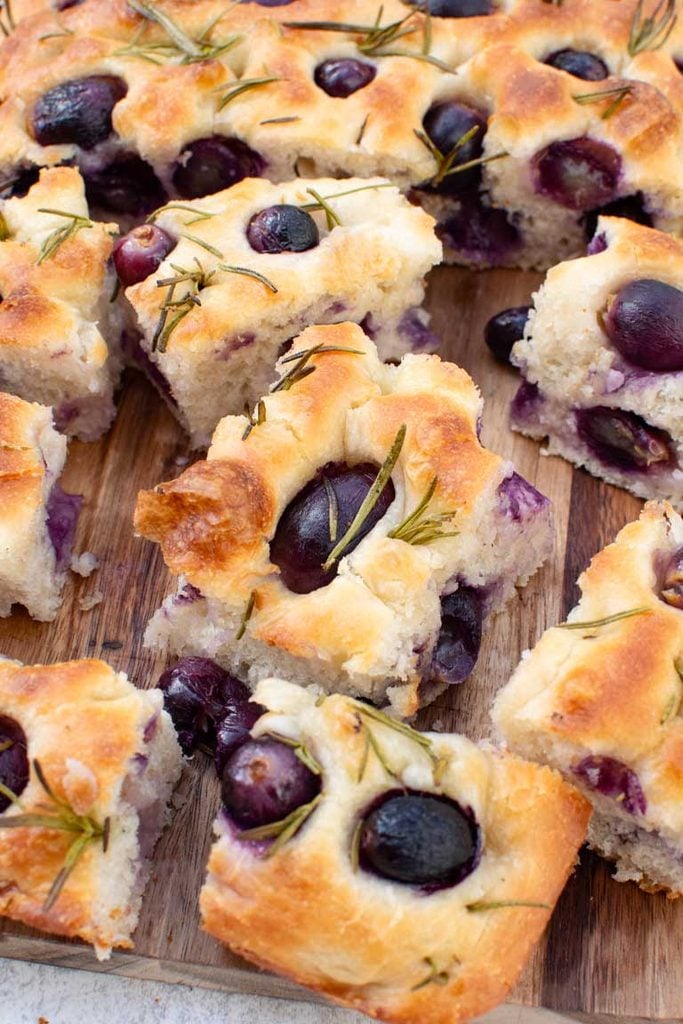
For a proper antipasti board, tear it into rough pieces and set it alongside cured meats or a plant-based alternative, marinated olives, and something soft and salty like burrata or a mild goat’s cheese; the sweetness of the grapes plays particularly well against something briny. It’s just as good served alongside a simple soup or a robust autumn salad, or torn up and used as the base for bruschetta-style toppings.
Leftovers, if there are any, are lovely lightly toasted the next morning with a spread of ricotta, or packed up for a picnic or lunchbox, since it travels well and needs no last-minute preparation.
Make Ahead and Storage
This is a bread that’s best baked close to when you plan to eat it, but there’s still some flexibility if you want to get ahead.
To make ahead: you can take the dough through kneading and the first rise, then cover and refrigerate it for up to 24 hours instead of leaving it somewhere warm. The cold slows everything right down and gives the flavour a bit more depth. Let it come back to room temperature before you assemble it in the tin. If it suits your timings better, you can instead do the second rise in the fridge overnight once the focaccia is assembled: cover the dish tightly, then take it out and let it sit at room temperature for an hour or so before baking, checking it’s properly puffy and wobbly before it goes in the oven.
To store: once fully cool, keep the focaccia in an airtight container or wrapped in a clean tea towel at room temperature for up to 2 days. A brief spell in a warm oven before serving will bring back some of the crispness on the base.
To freeze: wrap it tightly once completely cool and freeze for up to 2 months. Thaw at room temperature, then warm it through in a low oven to refresh the crust before serving.
Top Tips
- Oil your hands, not just the dish. This dough is deliberately slightly sticky, and oiled hands make it far easier to stretch and shape without adding extra flour, which can toughen the crumb.
- Don’t skip the dimpling. Pressing your fingers right down to the base creates pockets that hold the olive oil and stop the top from baking dry.
- Check the dish size before you start. A 35 x 23 x 6 cm tin gives the right dough depth. A smaller tin will give a taller, doughier focaccia and may need a few extra minutes in the oven.
- Use a non-stick dish, or swap the oil for butter. If your ovenproof dish isn’t non-stick, grease it with butter or a dairy-free spread rather than oil, so the baked focaccia releases cleanly.
- Trust the wobble test. The dough is properly proved when it looks puffy and bubbly and wobbles like jelly when you shake the dish; if it still feels tight and springs back firmly, give it a little longer.
- Finish with oil while it’s hot. The final drizzle of olive oil straight out of the oven is what gives the crust its shine and extra flavour, so don’t leave this step out.
Frequently Asked Questions About Grape Focaccia
Yes. Traditional schiacciata all’uva is made with small, seeded black grapes, but seedless black or red grapes work just as well.
Black or red grapes give the best colour and flavour, as they release a deep, jammy juice as they bake.
It’s best enjoyed the day it’s baked, when the crust is at its crispest, but you can bake it a few hours ahead and leave it, uncovered, at room temperature. It also keeps well in an airtight container for a day or two.
Yes. Once completely cool, wrap it tightly and freeze for up to 2 months. Thaw at room temperature, then warm through in a low oven to refresh the crust before serving.
This is usually down to under-proving. Both rises should take the dough to roughly double its size; if your kitchen is cold, find a warmer spot, or use a stand mixer with a heated bowl, such as the Kenwood Cooking Chef XL, to prove at a steady 30°C.
Both. The dough itself is a standard, lightly sweetened focaccia dough, and the grapes caramelise as they bake, giving pockets of jammy sweetness against the salty, olive-oil-rich crumb. It works equally well served with savoury food or eaten on its own.
Keep it in an airtight container or wrapped in a clean tea towel at room temperature for up to 2 days. Refresh briefly in a warm oven before serving to bring back some of the crispness.
Both names are used for the same bake and are entirely interchangeable; you’ll also see it called pan con l’uva or ciaccia con l’uva.
I hope you enjoy this grape focaccia recipe as much as I do. If you do make it, don’t forget to tag me on Instagram!
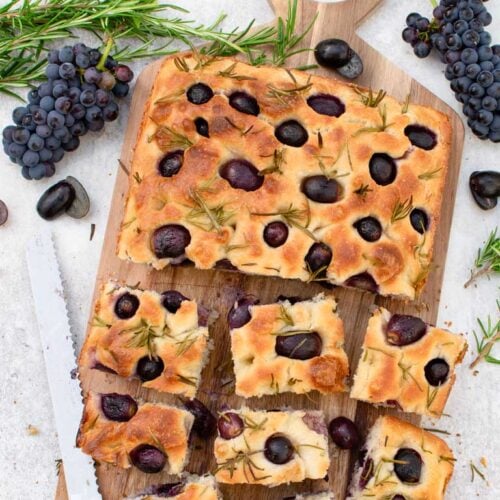
Grape Focaccia with Rosemary (Schiacciata con l’Uva)
Equipment
Disclaimer: the equipment list above includes affiliate links to products I use and like.
Watch How To Make This Recipe
Ingredients
- 500 g strong white bread flour
- 10 g fast-action dried yeast
- 2 Tbsp sugar
- 10 g fine salt
- 300-360 ml tepid water
- 6 Tbsp extra-virgin olive oil divided (plus extra for greasing)
- 350 g grapes (black or red)
- leaves from 3 fresh rosemary sprigs
Instructions
- Add the flour, yeast, sugar, and salt to a large mixing bowl or food processor. Keep the yeast and salt on opposite sides of the bowl before mixing (salt can inhibit the yeast if they come into direct contact). Stir the dry ingredients together.500 g strong white bread flour, 10 g fast-action dried yeast, 2 Tbsp sugar, 10 g fine salt
- Food processor: Fit the dough hook and set to medium-low speed. Gradually pour in the water, then add 2 tbsp of olive oil and mix until a slightly sticky dough forms.By hand: Make a well in the centre of the dry ingredients, then gradually pour in the water and 2 tbsp of olive oil. Mix with a wooden spoon or your hands until a slightly sticky dough forms.300-360 ml tepid water
- Knead the dough until soft and smooth: around 5 minutes with the food processor, or 10 minutes by hand on a lightly floured surface. The dough will be slightly sticky.
- Drizzle the dough with 1 tablespoon and leave to rise for 1 hour until doubled in size. If you are using the Kenwood Cooking Chef XL use the splashguard to cover the bowl and warm the bowl to 30°C with the Cooking Chef induction plate.
- Brush some olive oil to grease an ovenproof dish approximately 35 x 23 x 6 cm (14 x 9 x 2½ in). (If your dish is not non-stick, swap the oil for butter or dairy-free spread so the focaccia does not stick to the dish once baked).
- With oiled hands gather the dough into a ball.
- Split the dough on half. With oiled hand stretch the first half in the ovenproof dish until it covers the bottom of the dish completely.
- Spread half of the grapes on the dough.
- Shape the second half of the dough as a rectangle and arrange neatly on top of the grapes.
- Cover the dish and leave to rise in a warm spot for 1 hour until the focaccia has doubled in size.
- The dough is ready when it looks puffy and bubbly and wobbles when you shake the dish. It should have spread to mostly fill the ovenproof dish.
- Preheat the oven to 220°C (425°F).
- Drizzle 2 tbsp of olive oil over the top of the focaccia, then press your fingers deep into the dough to create dimples all over. Scatter over remaining grapes, and the rosemary leaves, pressing them gently into the dough.
- Bake for 25–30 minutes until golden.
- Leave the focaccia to cool in the tray for a couple of minutes, then transfer to a wire rack.
- Whilst the bread is still hot, drizzle over 1 tablespoon of olive oil.
- Leave to cool for 15 mins before serving.
Notes
Nutritional Information
Find this recipe online:
Grape Focaccia with Rosemary (Schiacciata con l’Uva)
https://theflexitarian.co.uk/recipe-items/grape-focaccia-rosemary/
I cannot wait to see your posts!
Other Things You Might Like



Leave a Reply