

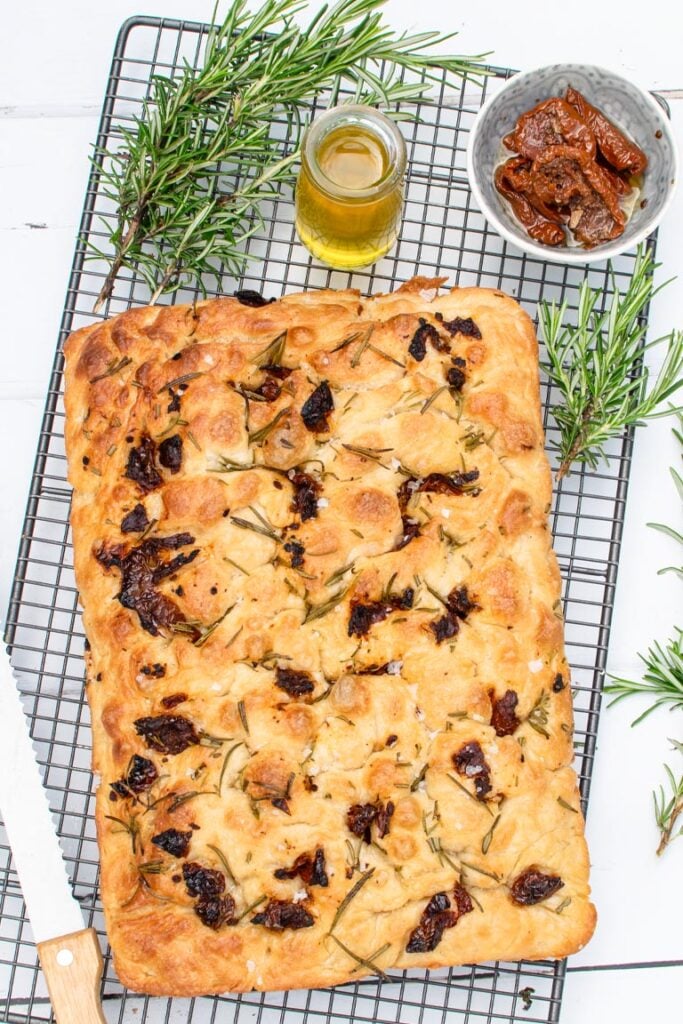
This focaccia bread with rosemary has a crispy outer curst and a pillowy soft middle. Topped with fresh rosemary, sundried tomatoes and flaky sea salt, this is an utterly addictive bread.
Easy Focaccia Bread with Rosemary (Overnight Recipe)
Don’t look away! “Overnight recipe” might sound like a lot of effort and skills are required (I was intimidated at first), but it’s actually the opposite. This focaccia bread with rosemary is actually very easy and the fridge does all the work for you. A slow, cold fermentation means the dough quietly develops a deeper, more complex flavour while you sleep. No monitoring, no timing stress (you can leave it in the fridge between 12 or 36 hours), no standing over a proving drawer willing the dough to rise. All you need is a little planning.
Mix the dough the evening before, pop it in the fridge, and by the next morning you’re more than halfway there. The result is a focaccia with a flavour and texture that a quick same-day recipe simply can’t match. This recipe in fact fits around your day rather than demanding your full attention. It’s perfect for the weekend as you can bake it the next morning and serve warm fresh focaccia by lunchtime.
This recipe is completely beginner-friendly, involving a simple knead and a couple of simple stretch-and-fold sets, nothing technical or that requires experience.
Inspiration: I am on a quest to bake as many world bread recipes as I can, so watch this space. Focaccia was on top of my bucket list. For this recipe, I drew inspiration for the stretch and fold method and dough shaping from the fabulous Lacey Ostermann from Laces Bake (and if you have any focaccia questions, make sure to download her Focaccia Fundamentals guide).
What Is Focaccia Bread?
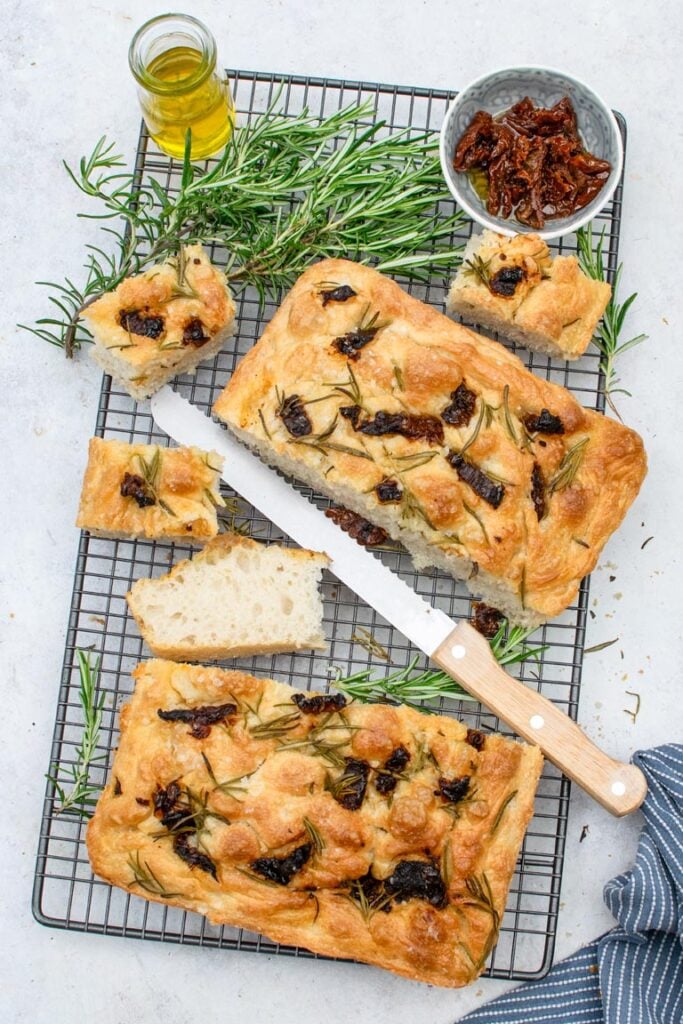
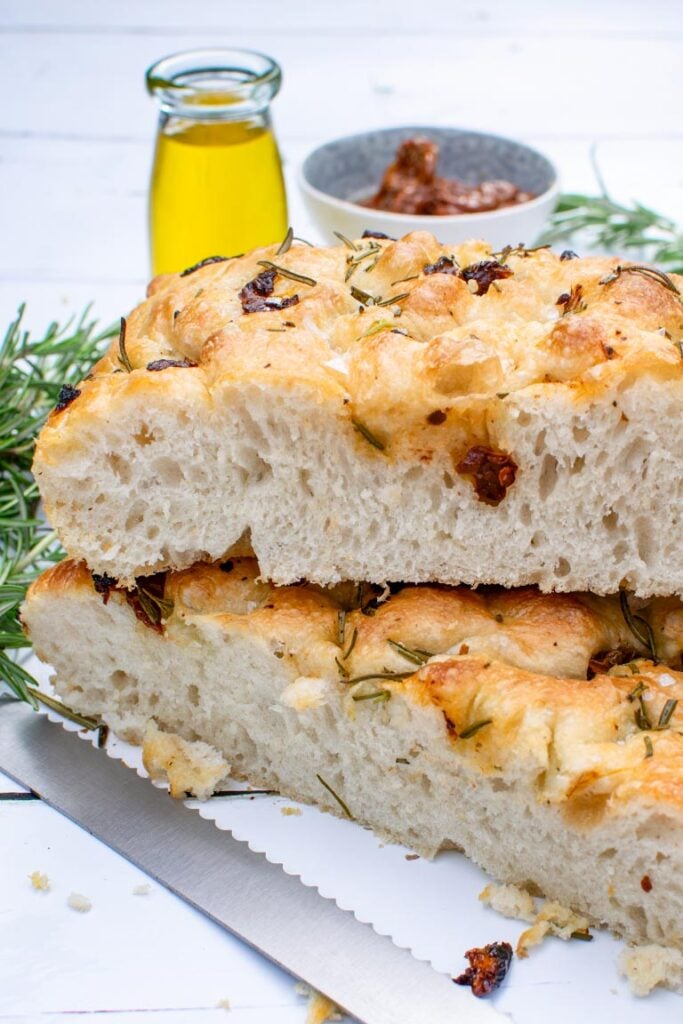
Focaccia is a traditional Italian flatbread baked with generous amounts of olive oil. It has a distinctively rich flavour, a wonderfully crispy base, and a light, open crumb.
The signature dimpled surface isn’t just decorative. Those deep pockets hold extra olive oil, herbs and toher toppings, making every bite a deeply satisfying experience.
Rosemary and flaky sea salt are the classic toppings, and here I’ve added sundried tomatoes for an extra layer of flavour.
Why You’ll Love This Recipe
- Minimal kneading: just 10 minutes by hand or 5 minutes in a food processor.
- Beginner-friendly: simple techniques, clear steps, brilliant results
- Naturally vegan
- Overnight cold fermentation: develops incredible flavour with very little effort
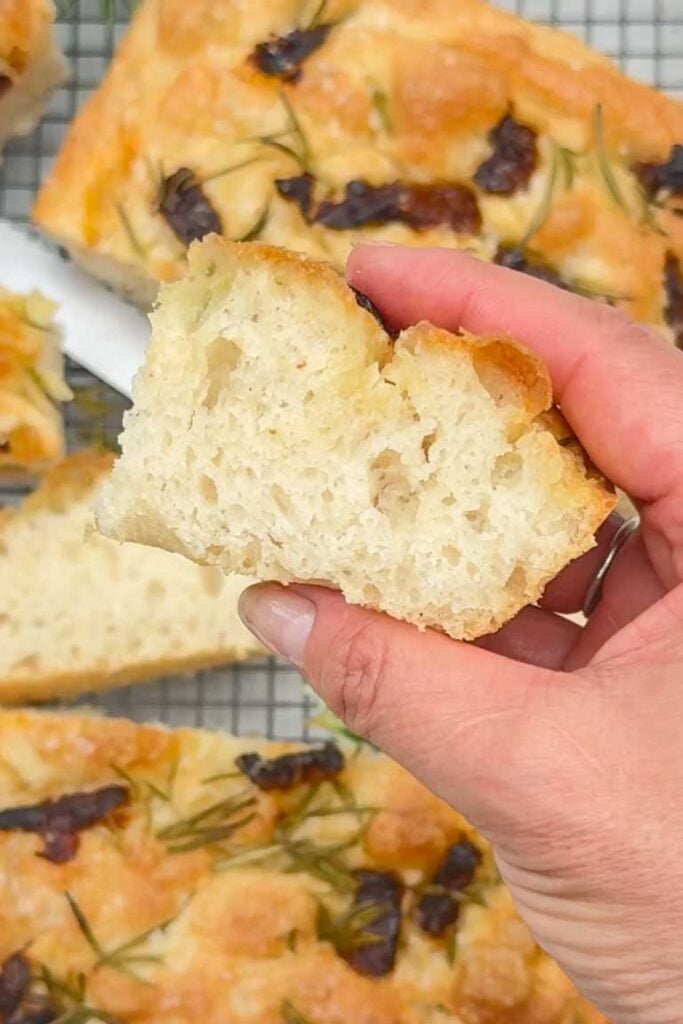
- Crisp, golden base and a light, pillowy interior
- Endlessly versatile: serve as a side, a snack, or a sandwich base
Other Bread Recipes To Try
- Pull Apart Bread Roll Wreath
- Grape Focaccia with Rosemary (Schiacciata con l’Uva)
- Slow Cooker Bread
- Cinnamon Raisin Bread
- Buckwheat Banana Bread (with dates)
Watch How To Make Overnight Focaccia Bread
Ingredients
For the dough:
- strong white bread flour
- fast-action dried yeast
- sugar
- sea salt
- tepid water
- extra virgin olive oil (best quality you can afford)
For the toppings:
- fresh rosemary
- sundried tomatoes
- flaky or coarse sea salt
- extra virgin olive oil

How to Make Focaccia Bread with Rosemary
Step 1: Make the Dough
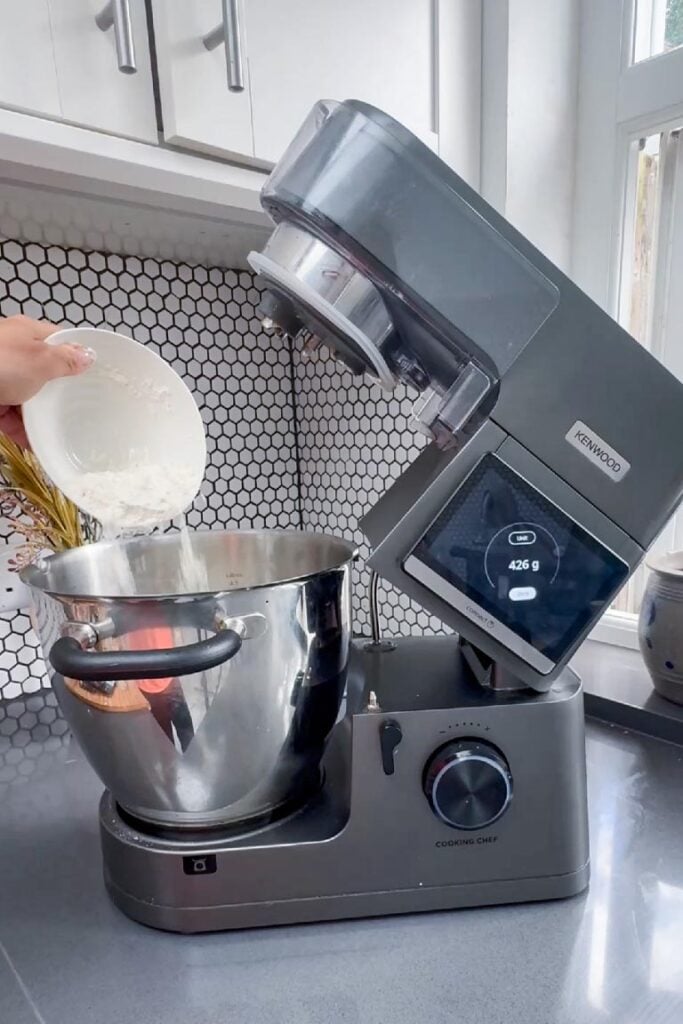
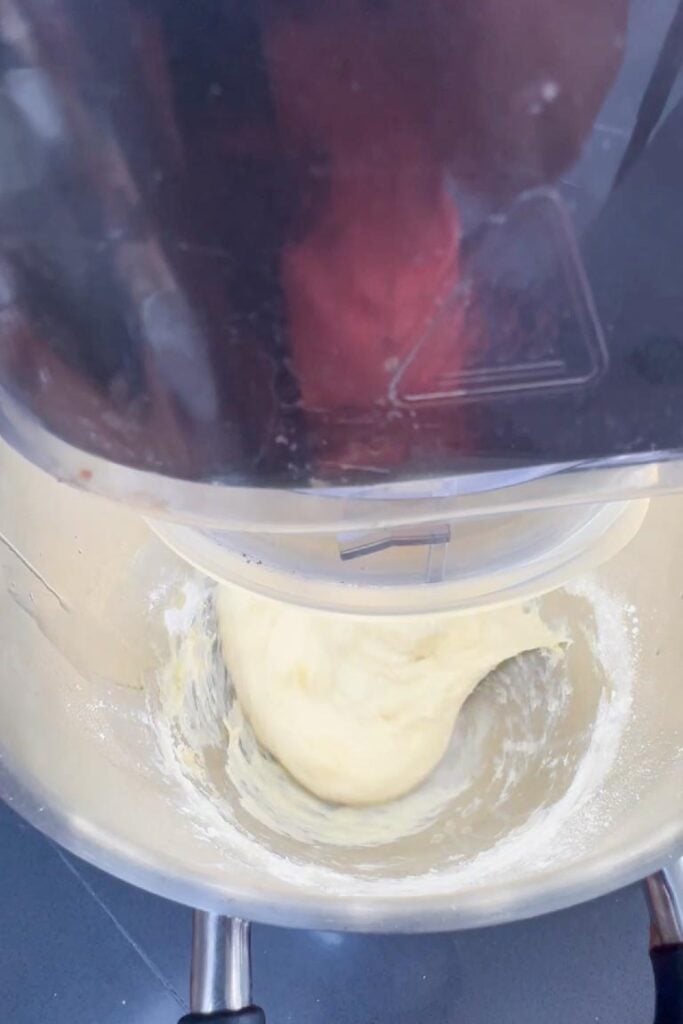
Add the flour, yeast, sugar, and salt to a large mixing bowl or food processor. Keep the yeast and salt on opposite sides of the bowl before mixing.
Food processor: Fit the dough hook and set to medium-low speed. Gradually pour in the water, then add 2 tbsp of olive oil and mix until a slightly sticky dough forms.
By hand: Make a well in the centre of the dry ingredients, then gradually pour in the water and 2 tbsp of olive oil. Mix with a wooden spoon or your hands until a slightly sticky dough forms.
Step 2: Knead The Dough
Knead the dough until soft and smooth (around 5 minutes in a food processor, or 10 minutes by hand) on a lightly floured surface. The dough will remain slightly sticky so resist the urge to add too much extra flour.
Step 3: Stretch and Fold
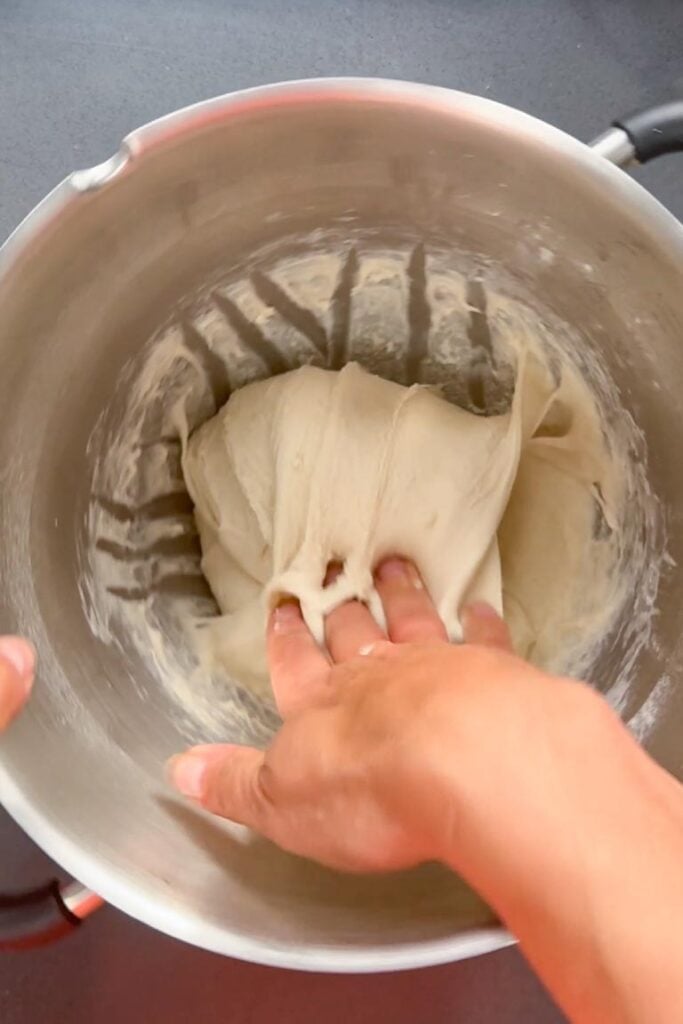
Cover the bowl and leave the dough to rest at room temperature for 10–15 minutes. With wet hands, perform the first set of stretch and folds: grab the edge of the dough, stretch it upward, and fold it into the centre. Rotate the bowl and repeat until you’ve worked all the way around.
Cover and rest for another 10–15 minutes, then repeat for a second set of stretch and folds. This helps build structure in the dough without any additional kneading.
Step 4: Cold Fermentation (Overnight)
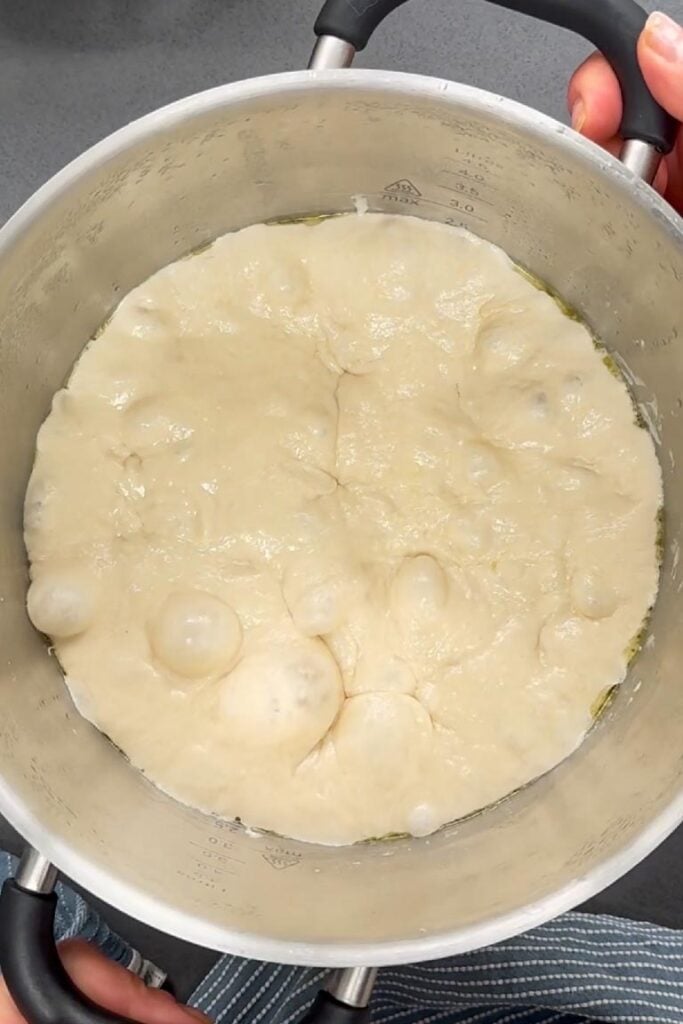
Shape the dough into a ball. Drizzle over olive oil and rub it all over to coat. Transfer to a large bowl if needed (the dough will roughly double in size overnight, so make sure there’s plenty of room). Cover tightly with a lid, plate, or cling film and refrigerate overnight.
Don’t be tempted to skip this step. The slow, cold fermentation is what gives this focaccia its incredible depth of flavour.
Step 5: Prepare the Dish and Shape
Grease an 35x23x6cm ovenproof dish with olive oil.
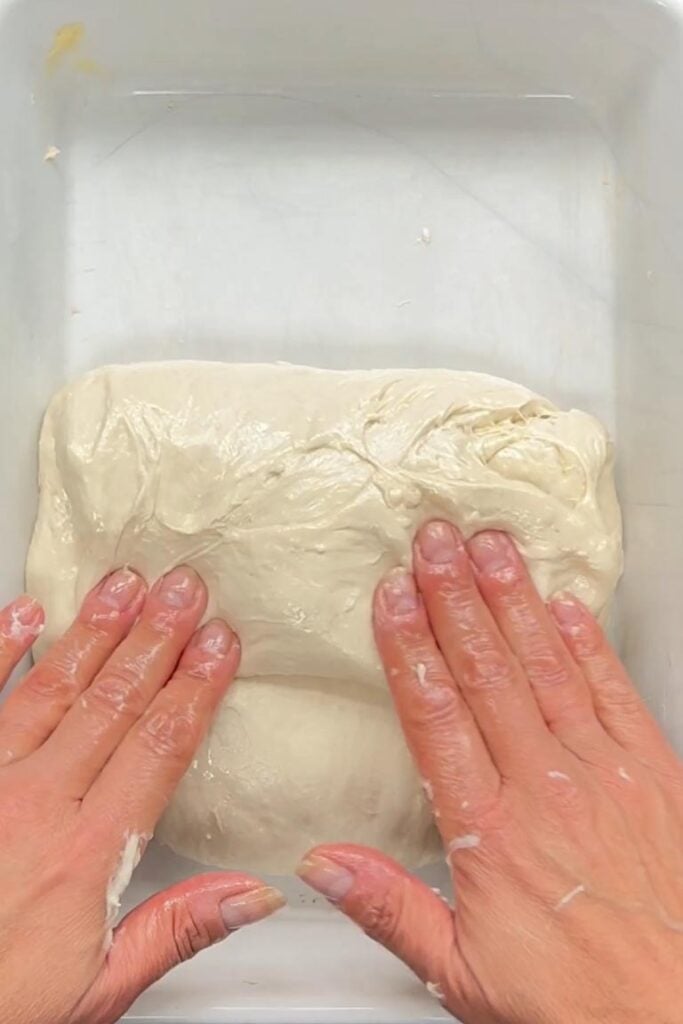
With oiled hands, gently transfer the dough to the prepared dish. Fold one side of the dough into the centre, then fold the other side over the top (just like folding a letter into thirds). Rotate the dough so the long edge aligns with the long side of the dish, then flip it over so the seam sits underneath and the surface is smooth.
Step 6: Second Prove
Oil the top of the focaccia with a little olive oil.
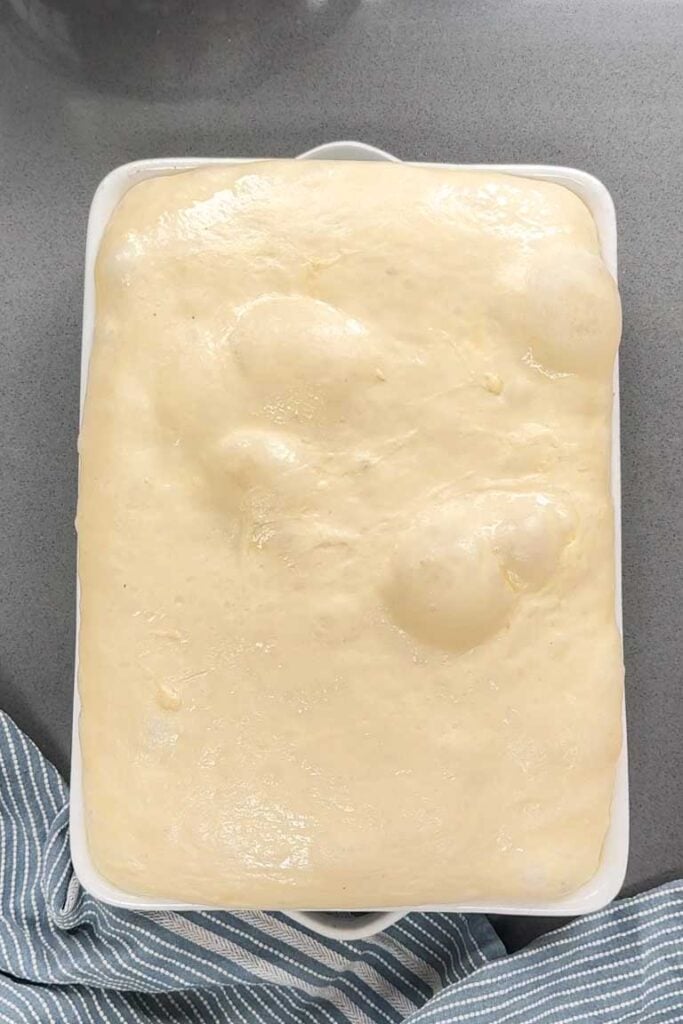
Cover the dish with a baking tray, oiled on the side facing the dough. Leave to prove at room temperature for 2–4 hours, until the dough has puffed up and spread to fill the dish. Timing will depend on how warm your kitchen is (in winter, find a warm spot to help things along).
The dough is ready when it looks puffy and bubbly and wobbles when you gently shake the dish.
Step 7: Dimple and Top
Preheat your oven to 220°C / 200°C fan / Gas 7.
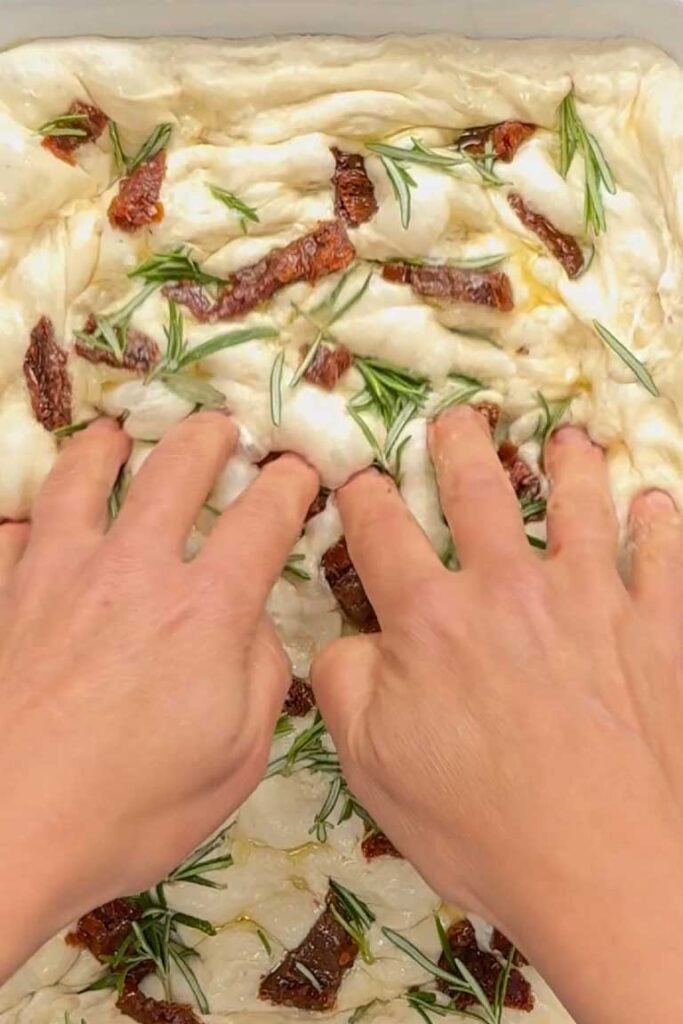
Drizzle 2 tbsp of olive oil over the surface. Press your fingers deep firmly into the dough to create dimples all over, be confident and press right down. Scatter over the sundried tomatoes, rosemary, and flaky sea salt, and press the toppings gently into the dough.
Step 8: Bake The Focaccia
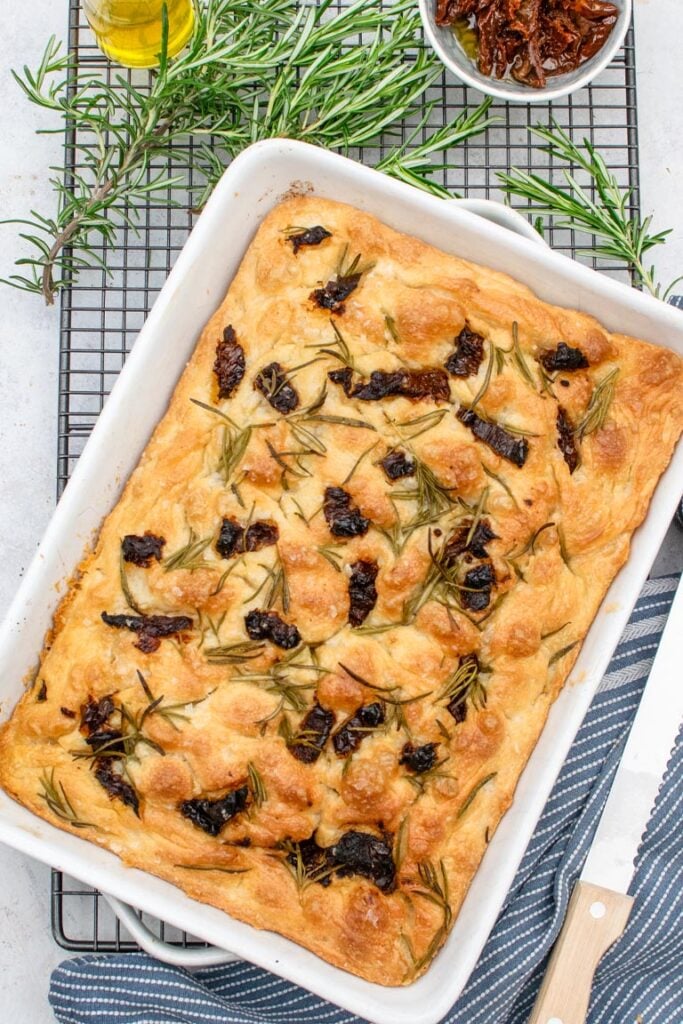
Bake for 25–30 minutes until deep golden on top.
Leave the focaccia to cool in the dish for a couple of minutes, then transfer to a wire rack. While still hot, drizzle over a little more olive oil. Leave to cool for at least 15 minutes before serving.
Tips for the Best Focaccia
Don’t skimp on the olive oil. It might feel excessive, but olive oil is the heart of this recipe.
The overnight cold prove is everything. Slow, cold fermentation develops flavour that a quick same-day prove simply can’t match. Plan ahead, it’s worth it.
Keep your hands wet or oiled, not floured, when handling the dough. Wet hands for the fold and stretch step are best. After that and especially after the overnight prove, the dough is soft and delicate. Oiled hands will help you handle it gently without tearing.
The letter fold matters. Folding the dough into thirds before the second prove builds a little more structure and helps give the finished focaccia a better rise and texture.
Be bold when dimpling. A light touch won’t create the deep pockets you’re after. Press firmly with all your fingertips, straight down to the base of the dish.
How to Serve Focaccia Bread with Rosemary
Focaccia is a very versatile bread. A few favourite ways to serve it:
- As a sharing bread: cut into chunks and serve alongside soups, salads, or pasta
- With dips: it’s spectacular next to whipped ricotta or whipped feta cheese dip
- For sandwiches: slice horizontally and fill with roasted vegetables, mozzarella, pesto or grilled halloumi
- As a side: serve warm alongside a big salad for a relaxed weekend lunch
- As part of an antipasto platter, mezze or grazing board
- Dipped in olive oil and balsamic: the simplest and arguably the best way to eat it
Topping Variations
Focaccia toppings are also very versatile. Here are some classic suggestions, but frankly let your imagination run wild:
- Cherry tomatoes and garlic:halved tomatoes pressed into the dimples with thinly sliced garlic
- Caramelised onion and thyme: deeply savoury and brilliant alongside cheese
- Olives and lemon zest: punchy and fragrant
- Flaky sea salt only: the purist option, and still absolutely delicious
How to Store Focaccia
At room temperature: Wrap in foil or store in an airtight container for up to 2 days. Focaccia is best on the day it’s made but still very good the following day.
To freeze: Slice the cooled focaccia, wrap tightly in cling film and then foil, and freeze for up to 1 month. Defrost at room temperature and warm through in a 180°C oven for 5–8 minutes before serving.
To reheat: Place slices on a baking tray in a 180°C / 160°C fan oven for 5–8 minutes until warmed through and the crust has crisped back up. Avoid the microwave as it softens the crust.
Frequently Asked Questions
At a pinch yes but strong white bread flour gives a noticeably better texture.
Olive oil gives focaccia its distinctive flavour and crispy outer crust while keeping it moist.
Stretch and folds are a gentle way of building structure in the dough without additional kneading. You simply grab the edge of the dough, stretch it upward, and fold it back into the centre, working your way around the bowl. Two sets of these (with a short rest in between) give the dough strength and contribute to a better final texture.
Press firmly and confidently with all your fingertips, straight down to the base of the dish. If the dough is well proved and well oiled, it won’t tear. A timid press won’t create the deep pockets you need.
Yes, this focaccia bread with rosemary is naturally vegan. Use a dairy-free spread to grease a non-stick dish and it’s completely plant-based.
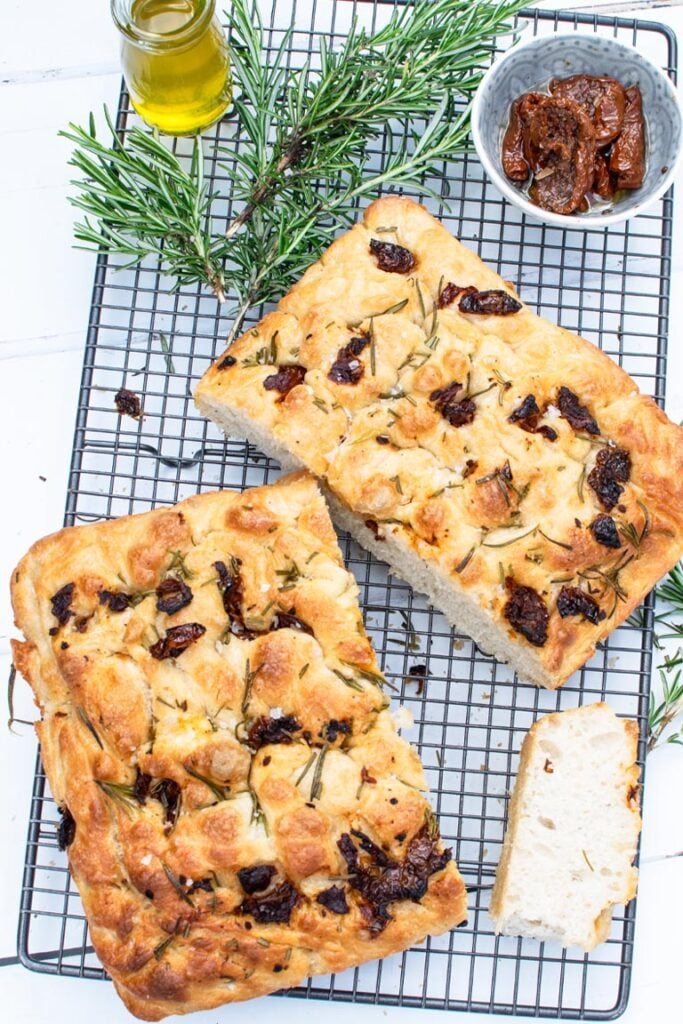
I hope you enjoy this focaccia bread with rosemary recipe as much as I do. If you do make it, don’t forget to tag me on Instagram! Make sure to save this recipe for later and share it with friends and family looking for fresh, healthy meal ideas!
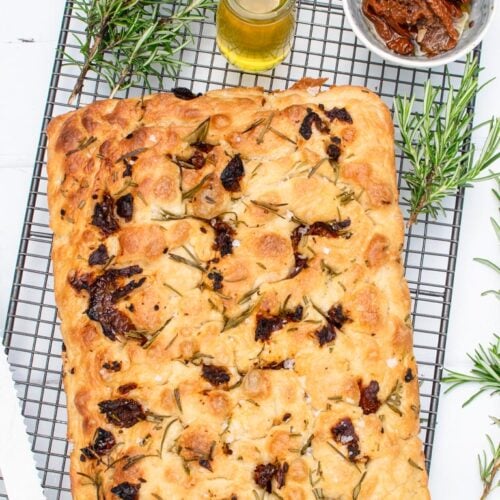
Focaccia Bread with Rosemary
Equipment
Disclaimer: the equipment list above includes affiliate links to products I use and like.
Watch How To Make This Recipe
Ingredients
- 500 g strong white bread flour
- 7 g fast-action dried yeast
- 2 tsp sugar
- 1 tsp fine sea salt
- 400 ml tepid water
- 6 Tbsp extra-virgin olive oil divided, See Notes
TOPPINGS:
- 50 g sundried tomatoes finely chopped
- leaves from 3 sprigs of fresh rosemary
- flaky or coarse salt
- 1 to 2 Tbsp extra-virgin olive oil
Instructions
- Add the flour, yeast, sugar, and salt to a large mixing bowl or food processor. Keep the yeast and salt on opposite sides of the bowl before mixing (salt can inhibit the yeast if they come into direct contact). Stir the dry ingredients together.500 g strong white bread flour, 7 g fast-action dried yeast, 2 tsp sugar, 1 tsp fine sea salt
- Food processor: Fit the dough hook and set to medium-low speed. Gradually pour in the water, then add 2 tbsp of olive oil and mix until a slightly sticky dough forms. By hand: Make a well in the centre of the dry ingredients, then gradually pour in the water and 2 tbsp of olive oil. Mix with a wooden spoon or your hands until a slightly sticky dough forms.400 ml tepid water
- Knead the dough until soft and smooth: around 5 minutes with the food processor, or 10 minutes by hand on a lightly floured surface. The dough will be slightly sticky.
- Cover the bowl and leave to rest at room temperature for 10–15 minutes. With wet hands, perform the first set of stretch and folds: grab the edge of the dough, stretch it upward, and fold it into the centre. Rotate the bowl and repeat until you've worked all the way around. Cover and rest for another 10–15 minutes, then repeat for a second set.
- Shape the dough into a ball. Drizzle over 2 Tbsp of olive oil and rub it all over the dough to coat. Transfer to a large bowl if needed (the dough will roughly double in size overnight, so make sure there's plenty of room). Cover tightly with a lid, plate or cling film and refrigerate overnight.
- Brush some olive oil to grease an ovenproof dish approximately 35 x 23 x 6 cm (14 x 9 x 2½ in). (If your dish is not non-stick, swap the oil for butter or dairy-free spread so the focaccia does not stick to the dish once baked)
- With a dough scraper and/or oiled hands, gently gather the dough and transfer it to the prepared dish.
- Keeping your hands oiled, fold one side of the dough into the centre, followed by the other side over the top, just like folding a letter into thirds.
- Rotate the dough so the long edge aligns with the long side of the dish, then flip it over so the seam sits underneath and the surface is smooth. Brush the top with a little olive oil.
- Cover the dish with a baking tray, oiled on the side facing the dough.
- Leave to proof at room temperature for 2–4 hours, until the dough has puffed up and spread to fill the dish. Timing will depend on how warm your kitchen is (in winter, find a warm spot to help the process along).
- The dough is ready when it looks puffy and bubbly and wobbles when you shake the dish. It should have spread to mostly fill the ovenproof dish.
- Preheat the oven to 220°C (425°F).
- Drizzle 2 tbsp of olive oil over the surface, then press your fingers deep into the dough to create dimples all over. Scatter over sundried tomatoes, rosemary and flaky sea salt and press the toppings into the dough.50 g sundried tomatoes, leaves from 3 sprigs of fresh rosemary, flaky or coarse salt
- Bake for 25–30 minutes until golden.
- Leave the focaccia to cool in the tray for a couple of minutes, then transfer to a wire rack.
- Whilst the bread is still hot, drizzle over some more olive oil.1 to 2 Tbsp extra-virgin olive oil
- Leave to cool for 15 mins before serving.
Notes
Nutritional Information
Find this recipe online:
https://theflexitarian.co.uk/recipe-items/focaccia-bread-with-rosemary/
I cannot wait to see your posts!
Other Things You Might Like


