

Soft, buttery and studded with rum-soaked raisins, kugelhopf is the tall, fluted festive bake of Alsace, perfect with a morning coffee or as a sweet treat over the Christmas holidays. Here’s my family’s treasured recipe, made easier for today’s kitchens, with everything you need to bake your own.
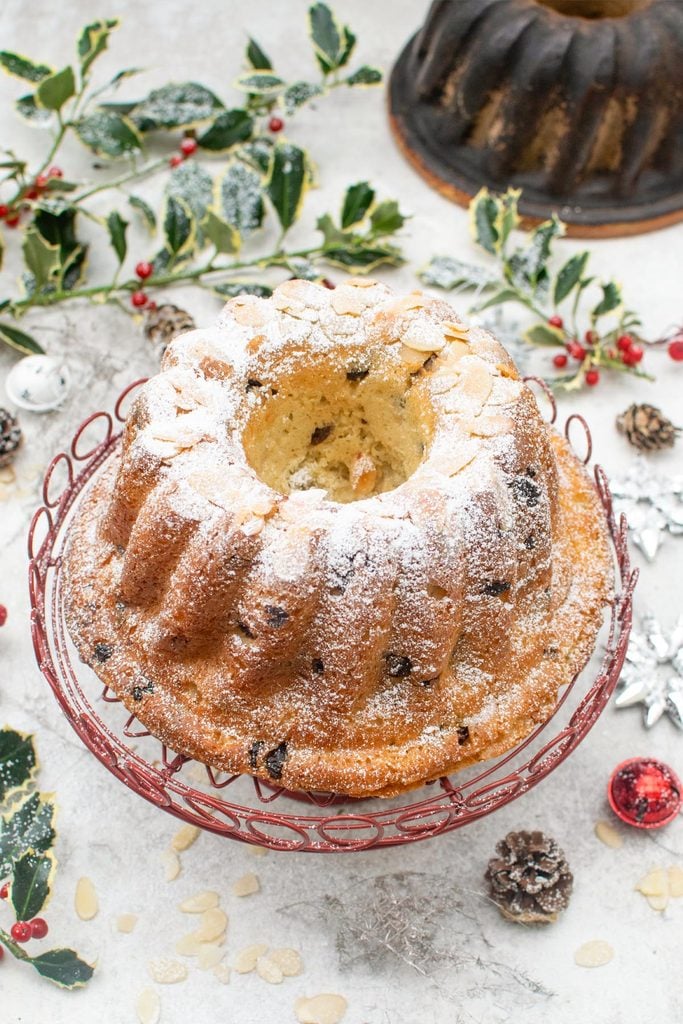
Traditional Alsatian Kugelhopf: My Family’s Christmas Recipe
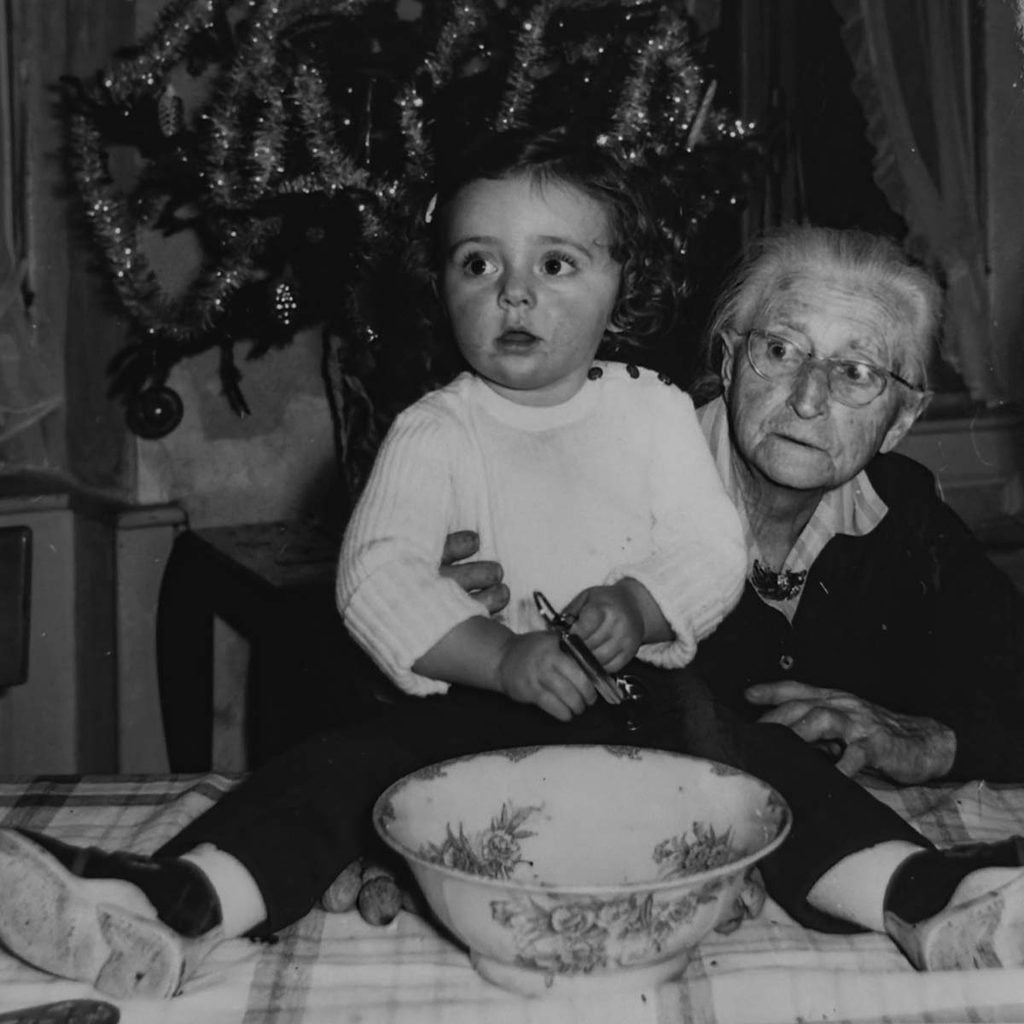
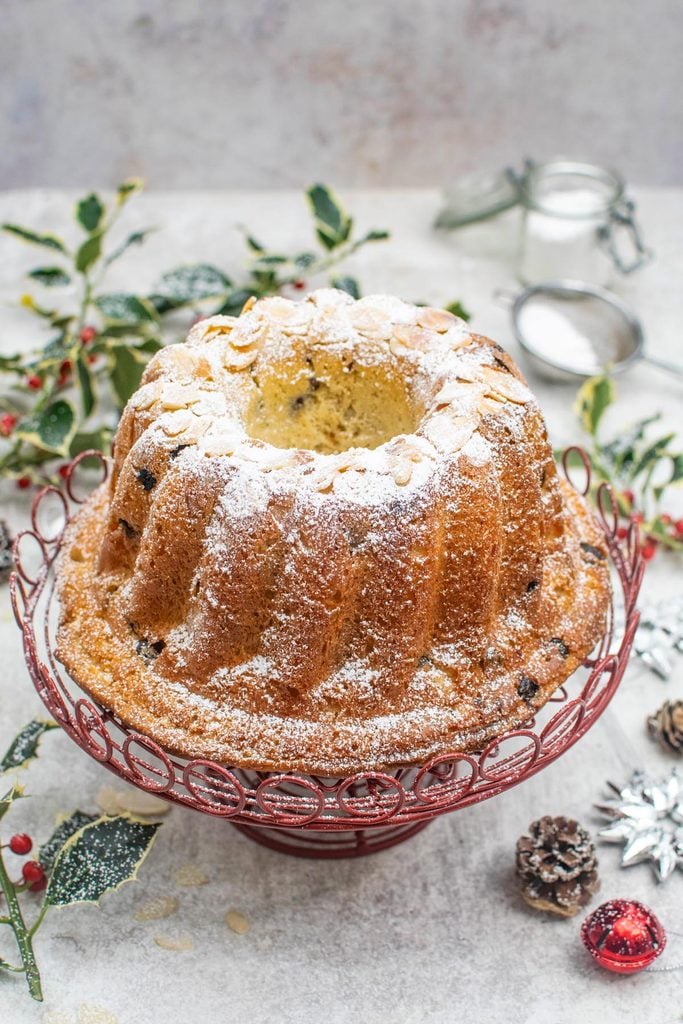
Kugelhopf, or kouglof as we have always called it in my family, is the Christmas cake I grew up with. This recipe comes from my Alsatian great-grandmother. It has been handed down through the generations and adapted a little along the way. Christmas wouldn’t feel like Christmas without it.
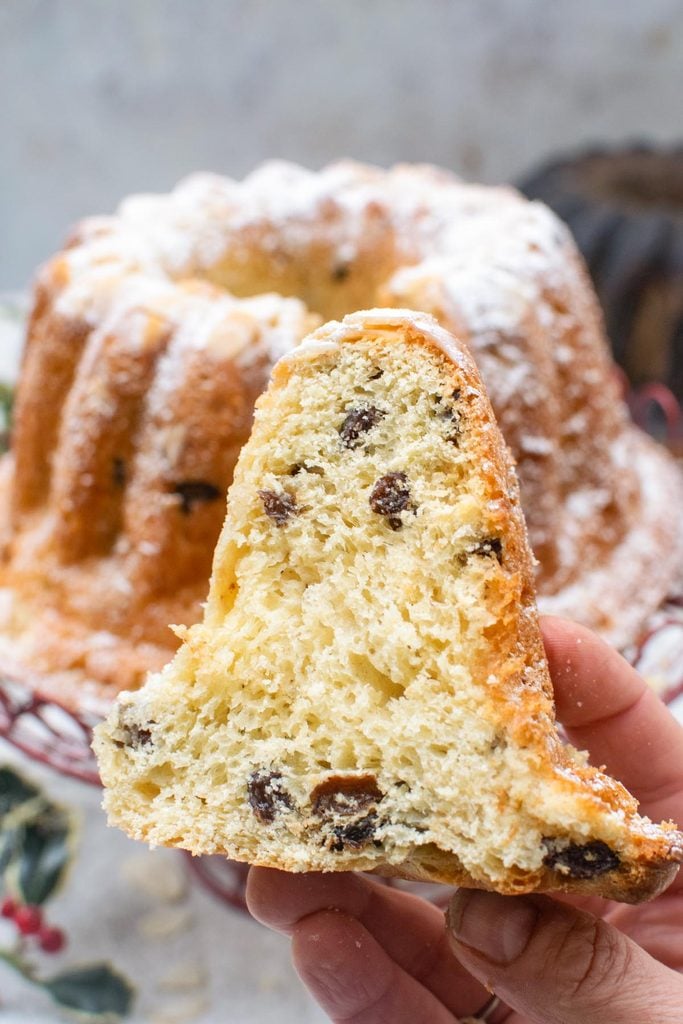
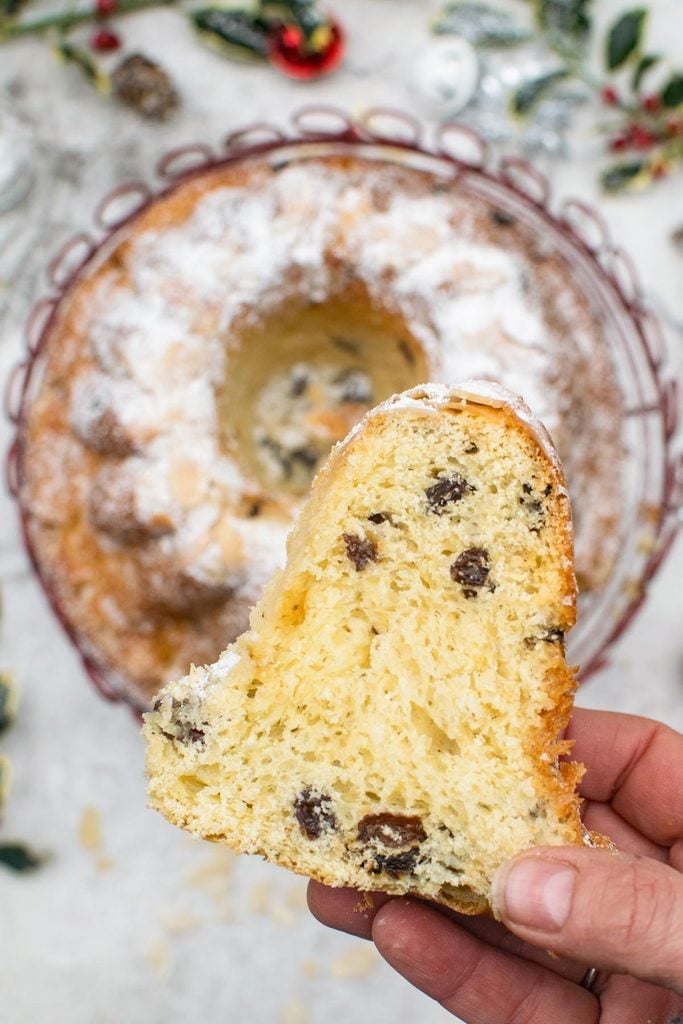
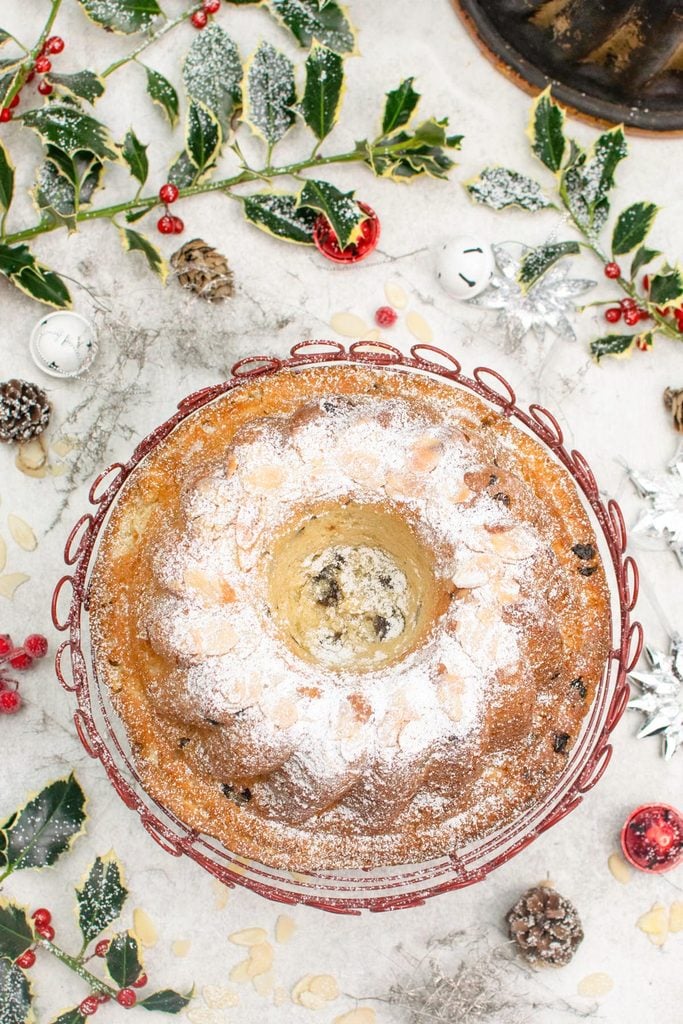
A kugelhopf sits somewhere between bread and cake: a light, buttery brioche dough studded with rum-soaked raisins, baked in a tall fluted mould and finished with a snowy dusting of icing sugar. My family’s handwritten notes call for fresh yeast and three rounds of kneading and rising in a warm kitchen. This is the way my mum used to make it, kneading the dough by hand until her hand went numb. I’ve kept the spirit of her recipe but made it easier for today’s kitchens:
- Fast-action dried yeast instead of fresh yeast, which can be hard to find outside a bakery.
- An overnight cold prove in the fridge, which does most of the work while you sleep and gives a deeper, more buttery flavour.
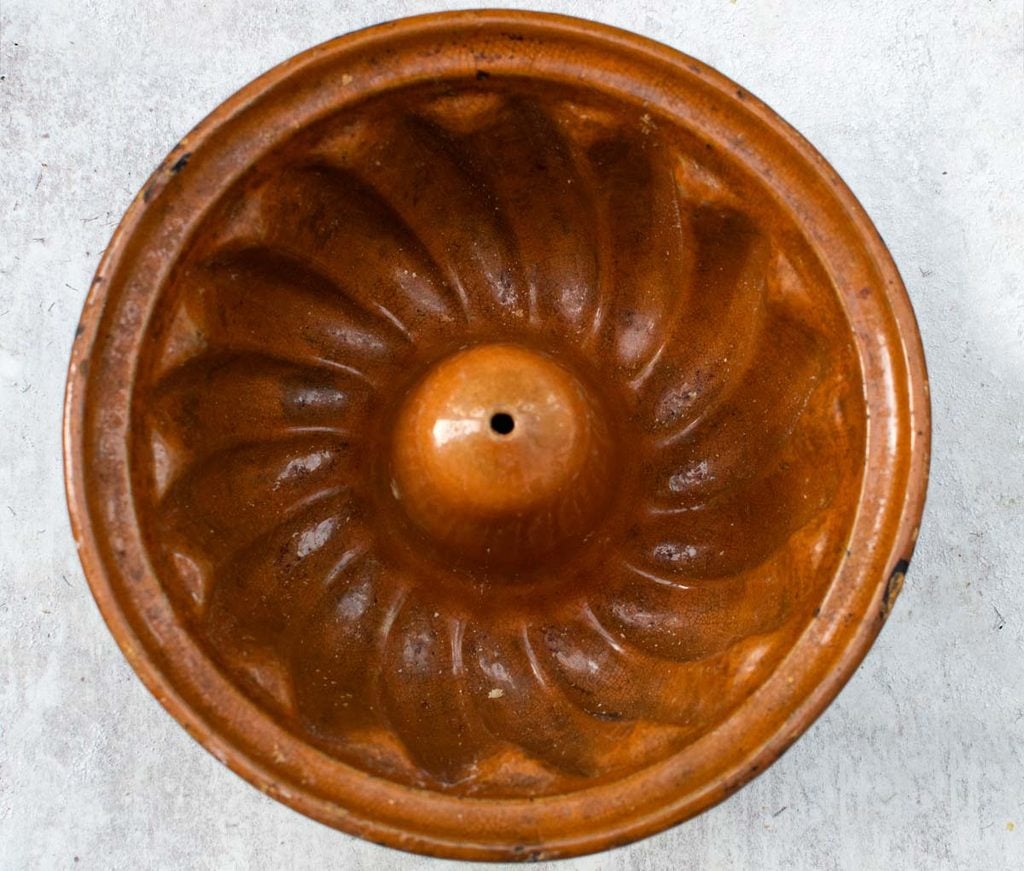
- I use my great-grandmother traditional Alsatian terracotta mould (it’s over a 100 years old), but a bundt tin works too.
More family recipes
This kugelhopf joins my family recipes collection, alongside my Pissaladière. For more festive baking, browse my bread recipes, try the pull-apart bread roll wreath, or explore all my Christmas recipes.
Watch how to make kugelhopf
What is kugelhopf?
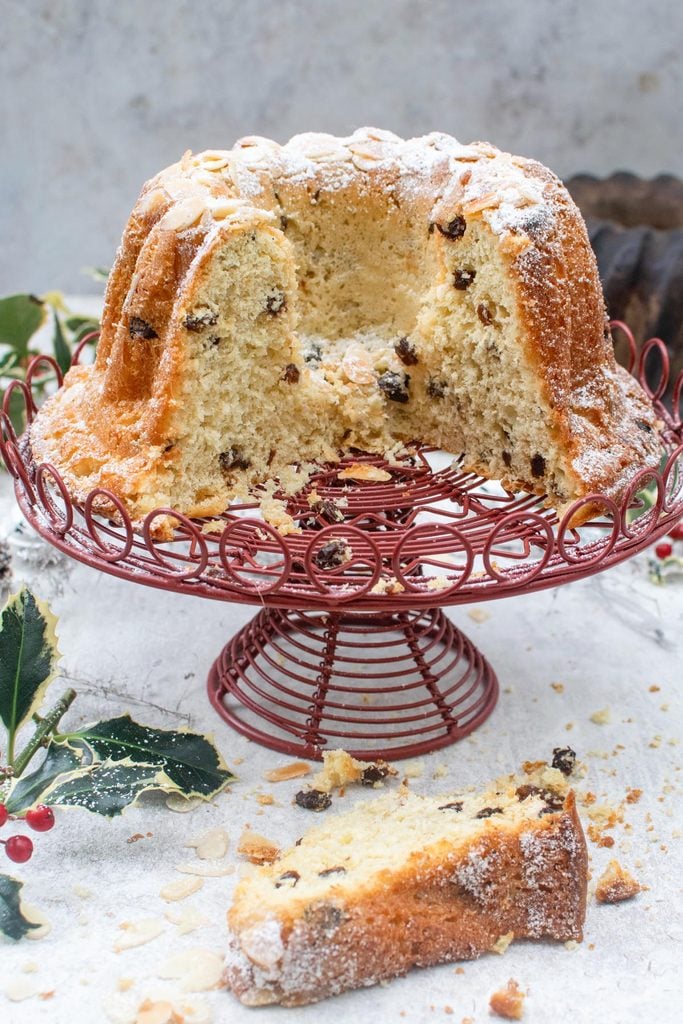
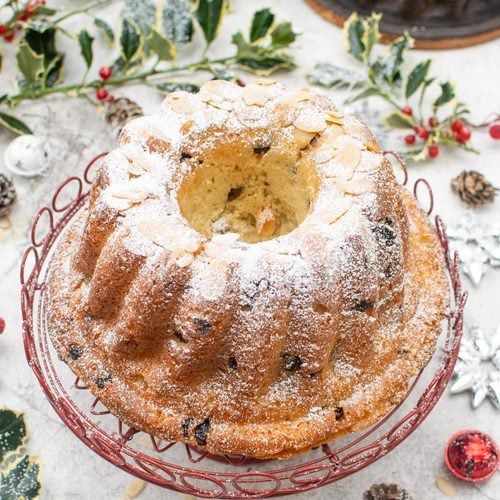
Kugelhopf is an enriched yeast cake from Alsace, the region in north-east France that borders Germany and Switzerland. It’s made with flour, butter, eggs, milk and a little sugar, with raisins and almonds. Its distinctive shape comes from the mould: tall, fluted and with a central chimney.
With its fluted shape and almond crown, the cake has become a symbol of Alsace where it’s eaten at breakfast, with afternoon coffee, and at Christmas. Any couple getting married in Alsace will generally be given a kugelhopf mould as a wedding gift. As a family we own three, one sits safely on top of my kitchen cupboards in London while the other two are in my parents’ kitchen in the South of France next to a giant baeckeoffe terrine.
What’s in a name? Kouglof, kougelhopf, kugelhopf, gugelhupf
Few cakes have as many spellings. In France it’s usually kouglof. In Alsatian dialect it’s kougelhopf (or kugelhopf). In Austria and southern Germany it becomes gugelhupf, which is often a lighter sponge or marble cake rather than a yeasted one. In the UK, most recipes use kugelhopf. It’s the same family of cakes either way, and in my family it has always simply been kouglof.
A recipe handed down
My great-grandmother’s transcribed recipe notes are wonderfully brief, written by someone who had made this cake a hundred times: 400g flour, a mustard glass of tepid milk with fresh yeast melted into it, three eggs, three spoonfuls of sugar, softened butter and raisins soaked in rum. She buttered her mould and pressed an almond into every groove, so the almonds sit like a crown when the cake is turned out. She worked the dough three times, an hour apart, and let it rise the third time in the mould. Once it was out of the oven, she soaked it in a syrup made with 12 sugar cubes and a little water.
The quantities in my version are almost unchanged. Even the syrup is the same: 60g of sugar is roughly those 12 sugar cubes. What has changed is the method, which fits around modern life. Every Alsatian family seems to have its own version; if you enjoy the story behind recipes like this, Christine Ferber’s kugelhopf is a lovely read.
Fresh yeast vs fast-action dried yeast
Fresh yeast is traditional in Alsace, but it isn’t easy to buy in the UK, you might get lucky at your local bakery. Fast-action dried yeast (also sold as easy-bake or instant yeast) comes in 7g sachets and is mixed straight into the flour, with no need to activate it beforehand.
- This recipe uses one 7g sachet of fast-action dried yeast. Not to be confused with dried active yeast (sold in tubs), which needs activating in warm liquid first.
- If you prefer fresh yeast, my great-grandmother used 22g. Here is a handy conversion chart, depending on what you have at hand. Crumble it into some of the tepid milk and leave it to foam before adding it to the flour.
Why an overnight cold prove?
Brioche-style doughs are soft and sticky when warm. Chilling the dough overnight firms up the butter, making it much easier to handle, and the slow fermentation develops a richer flavour. It also splits the work over two days: about 30 minutes of mixing the evening before, then shaping, a final rise and baking the next morning. That makes it perfect for a Christmas breakfast or for baking ahead of guests arriving.
I used the same method for my rosemary focaccia.
The terracotta Alsatian mould (and how to care for it)
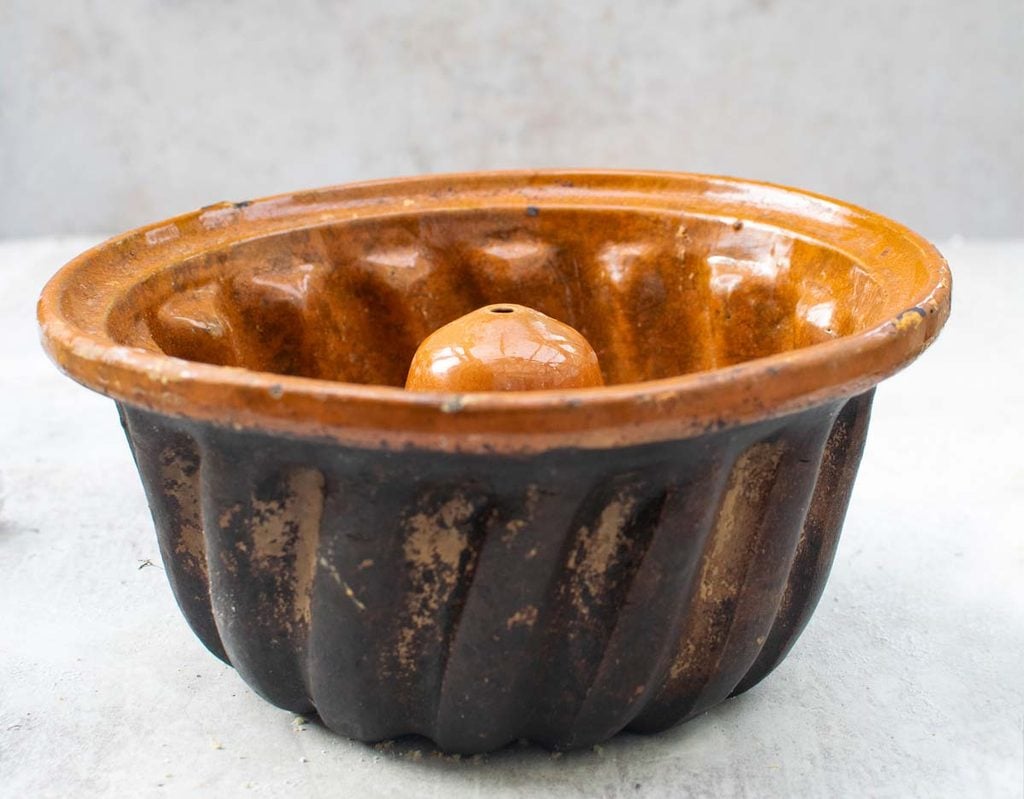
Traditional kugelhopf moulds are made of glazed terracotta, many of them by the potters of Soufflenheim, a village in northern Alsace. Terracotta heats gently and evenly, which gives a tender crumb and a beautifully coloured crust. Soufflenheim kougelhopf moulds are still made by hand and can be bought online.
- Season a new mould before first use: grease the inside generously with butter or oil and bake it empty in a low oven (about 100°C) for 15 minutes.
- Don’t wash it with washing-up liquid. Wipe it out with a damp cloth or paper towel. Over time it builds up a natural non-stick layer.
- Grease it generously every time, right into the grooves.
No mould? Use a bundt tin
A metal bundt tin of a similar volume (about 2–2.5 litres) works well. Metal conducts heat faster than terracotta, so start checking the kugelhopf 5–10 minutes early, and cover it loosely with foil if the top browns too quickly.
How to make kugelhopf
Ingredients
You only need a handful of everyday ingredients. Full quantities are in the recipe card below.
- Flour: a mix of plain and strong white bread flour. The bread flour gives the dough structure and the plain flour keeps the crumb soft and cake-like.
- Fast-action dried yeast: one 7g sachet, mixed straight into the flour.
- Eggs, milk and butter: these enrich the dough and give it its brioche texture. Use tepid milk, and make sure the butter is properly softened so it works into the dough easily.
- Sugar and salt: just three tablespoons of sugar. The cake is only lightly sweet, with most of the sweetness coming from the syrup and icing sugar.
- Raisins and rum: soaking the raisins plumps them up so they stay juicy in the bake. For an alcohol-free version, soak them in warm black tea or orange juice instead.
- Flaked almonds: scattered into the buttered mould, they form the almond crown when the cake is turned out.
- Syrup: sugar, water and a splash of rum, brushed over the warm cake to keep it moist.
- Icing sugar: for the snowy finish.
How to make kugelhopf step by step
The work is split over two days: about 30 minutes of mixing the evening before, then shaping, rising and baking the next day.
Day 1: make the dough
- Soak the raisins. Put the raisins in a bowl, pour over the rum, cover and set aside while you make the dough.
- Mix the dough. Put both flours, the yeast, sugar and salt in the bowl of a stand mixer. Add the eggs and tepid milk and knead with the dough hook for 5 minutes.
- Work in the butter. Add the softened butter a little at a time, then keep kneading for 10–12 minutes until the dough is smooth, glossy and elastic. It will be very soft at this stage.
- Add the raisins. Drain the raisins (you can keep the rum for the syrup) and fold them evenly through the dough.
- Chill overnight. Leave the dough in the bowl, cover and put it in the fridge overnight.
Day 2: shape, prove and bake
- Prepare the mould. Butter your kugelhopf mould or bundt tin generously, getting into every groove, then scatter the flaked almonds over the bottom.
- Fill the mould. The chilled dough will be firm, so press it evenly around the mould. Cover and leave somewhere warm for 1–2 hours, until it has risen to the top.
- Bake. Preheat the oven to 170°C / 150°C fan / gas mark 3 and bake for 40–45 minutes, until deep golden and a skewer comes out clean. Cover loosely with foil if the top browns too quickly.
- Make the syrup. While it bakes, warm the water in a small pan, stir in the sugar until it dissolves, then add the rum.
- Turn out and soak. Leave the kugelhopf in the mould for 5 minutes, then turn it out onto a wire rack and brush the syrup all over while it is still warm.
- Finish. Leave to cool completely, then dust generously with icing sugar just before serving.
How to serve kugelhopf at Christmas
Kugelhopf can be a little bit dry (hence why I add syrup to mine). In Alsace, it is served in thick slices, plain or with butter and jam. It’s also lovely with a fruit salad, homemade quince jelly, alongside a bowl of homemade yoghurt at breakfast, or with a glass of Crémant d’Alsace as an apéritif. For a festive buffet, serve it with my Christmas cinnamon rolls and a colourful Christmas salad wreath.
Storing, freezing and leftovers
- Store in an airtight tin or wrapped in a clean tea towel at room temperature for 2–3 days.
- Freeze whole or in slices, well wrapped, for up to 1 month. Defrost at room temperature and dust with fresh icing sugar.
- Leftovers: a slightly stale kugelhopf is delicious toasted, used for French toast, or in a bread and butter pudding.
Frequently asked questions
Nothing. They’re the same cake. Kouglof is the French spelling, kougelhopf and kugelhopf are Alsatian, and gugelhupf is the Austrian and German name.
KOOG-lof. Kugelhopf is pronounced KOO-gul-hopf.
Both, in a way. It’s made from an enriched yeast dough like brioche, but it’s sweet and served like a cake.
Yes. Soak the raisins in orange juice instead of rum, and use orange juice in the syrup.
Yes. Use 22-25g fresh yeast, crumbled into some of the tepid milk and left to foam, as my great-grandmother did.
Use a bundt tin of a similar size and start checking it 5–10 minutes early.
Usually the final rise was too short. Cold dough from the fridge needs time to warm up and rise to the top of the mould before baking, so give it the full time.
I hope you enjoy this kugelhopf recipe as much as I do. If you do make it, don’t forget to tag me on Instagram!
Kugelhopf (Alsatian Kouglof)
Equipment
Disclaimer: the equipment list above includes affiliate links to products I use and like.
Watch How To Make This Recipe
Ingredients
For the raisins
- 150 g raisins
- 125 ml rum
For the dough
- 200 g plain white flour
- 200 g strong white bread flour
- 7 g fast-action dried yeast
- 3 tbsp granulated sugar
- 1 tsp salt
- 3 eggs
- 160 ml tepid milk
- 150 g butter softened and cubed, plus extra for greasing
- 30 g flaked almonds
For the syrup
- 60 g white sugar
- 50 ml water
- 2 tbsp rum
To finish
- icing sugar for dusting
Instructions
Day 1
- Soak the raisins: put the raisins in a bowl and pour over the rum. Cover and set aside to soak while you make the dough.150 g raisins, 125 ml rum
- Mix the dough: put both flours, the yeast, sugar and salt in the bowl of a stand mixer. Add the eggs and milk, then knead with the dough hook for 5 minutes.200 g plain white flour, 200 g strong white bread flour, 7 g fast-action dried yeast, 3 tbsp granulated sugar, 1 tsp salt, 3 eggs, 160 ml tepid milk
- Add the butter a little at a time and keep kneading for 10–12 minutes, until the dough is smooth and elastic.150 g butter
- Drain the raisins (keep the rum in an airtight container for the syrup if you like) and fold them into the dough.
- Leave the dough in the bowl, cover and chill in the fridge overnight.
Day 2
- Grease a kugelhopf mould (or bundt tin) generously with butter and scatter the flaked almonds over the bottom.30 g flaked almonds
- Put the dough in the mould. It will be cold and stiff, so press it evenly around the mould. Cover and leave somewhere warm for 1–2 hours, until it has risen to the top of the mould.
- Preheat the oven to 170°C / 150°C fan / 338°F / gas mark 3.
- Bake the kugelhopf for 40–45 minutes, until deep golden and a skewer comes out clean. If the top browns too quickly, cover it loosely with foil.
- Make the syrup: while it bakes, warm the water slightly in a saucepan, then stir in the sugar until it dissolves. Add the rum and mix well.60 g white sugar, 50 ml water, 2 tbsp rum
- Once baked, leave the kugelhopf to cool in the mould for 5 minutes, then turn it out onto a wire rack.
- Brush the syrup all over the warm kugelhopf.
- Leave to cool completely, then dust with icing sugar and serve.icing sugar
Notes
- Fresh yeast: use 22g fresh yeast. Crumble it into some of the tepid milk with a teaspoon of sugar and leave it to foam before adding it to the flour.
- Traditional almonds: for the classic Alsatian look, press a whole blanched almond into each groove of the mould instead of using flaked almonds.
- Alcohol-free: soak the raisins in orange juice, and use orange juice instead of rum in the syrup.
- Terracotta mould: season a new mould before first use. Don’t wash it with washing-up liquid; wipe it clean with a damp cloth.
- Bundt tin: start checking 5–10 minutes early, as metal bakes faster than terracotta.
- Storage: keeps for 2–3 days in an airtight tin, and freezes well for up to 1 month.
Nutritional Information
Find this recipe online:
https://theflexitarian.co.uk/recipe-items/kugelhopf-recipe/
I cannot wait to see your posts!
Other things you might like
- Cinnamon Raisin Bread
- Strawberry Rhubarb Sweet Rolls with Ginger & Almond Praline
- Christmas Tree Pull Apart Bread with Mozzarella & Garlic Butter
- Apple Butter
- Baked Eggs with Mushrooms (Oeufs en Cocotte)



Leave a Reply