

This fermented cashew cheese is a tangy, cultured vegan cheese made with just a handful of ingredients. Creamy and spreadable, it’s perfect for a party cheeseboard.
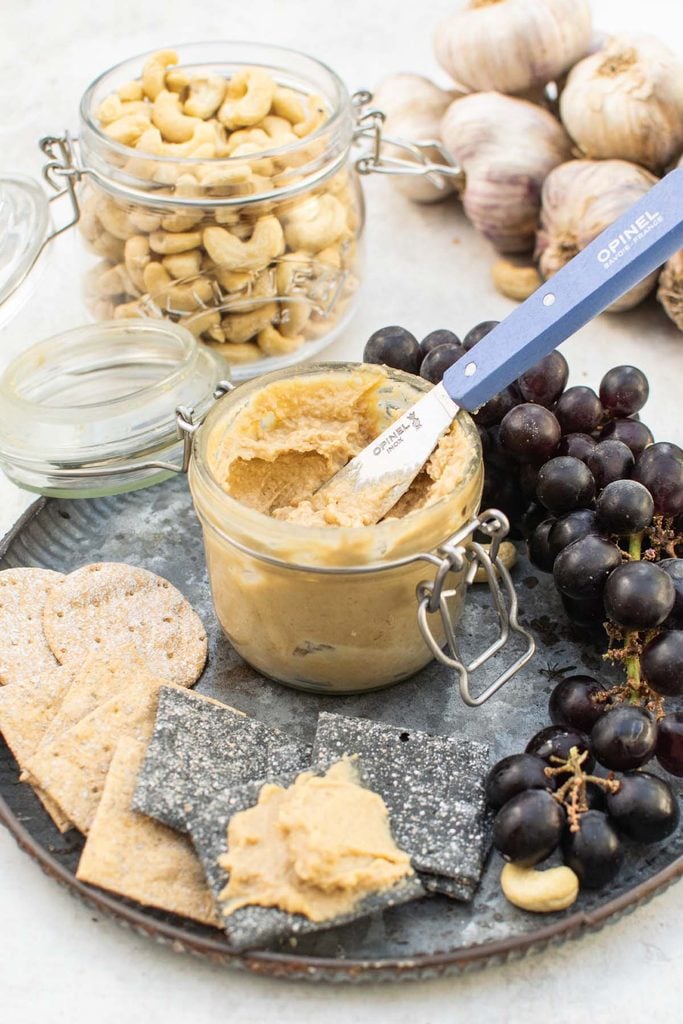
Easy Fermented Cashew Cheese with Miso
If you’ve made my vegan cream cheese with chives, you’ll know how good blended cashews can be. Fermented cashew cheese takes things a step further. A spoonful of white miso brings the live culture, and two days sitting somewhere warm turns blended cashews into a tangy, complex, properly cheesy vegan cheese. A perfect addition to a party cheese board or an antipasto platter.
It’s the closest thing to a soft dairy cheese I’ve made at home, and it’s surprisingly hands-off: you blend, you wait, you chill. It’s also the base for my vegan Christmas cheese ball, so if you’re planning ahead for Christmas, start here.
More fermented and cashew recipes
- Vegan cream cheese with chives: my smooth, everyday spread for bagels and toast.
- Vegan garlic and herb cheese: soft, punchy and made for crackers.
- Cashew parmesan: a 5-minute grated topping for pasta, pizza and salads.
- Vegan Christmas cheese ball: this fermented cashew cheese, shaped and rolled in a festive coating.
- 7 fermented foods to make at home: more easy ferments to try.
What is fermented (cultured) cashew cheese?
It’s blended cashews left to ferment with friendly bacteria. The bacteria feed on the natural sugars in the cashews and produce lactic acid, which gives the cheese its tang and depth. A similar process that turns milk into yoghurt or soft cheese.
Fermented foods are made with the help of microbes, but not every fermented food contains live probiotics by the time you eat it. Check out the International Scientific Association for Probiotics and Prebiotics explains the difference in its guide to fermented foods.
Fermented vs cultured – is there a difference?
Not really. You’ll see both names used for the same thing. “Cultured” emphasises that you add a starter culture; “fermented” describes what happens next. This recipe is both.
Why miso?
Miso is itself a fermented food, so a single teaspoon does two jobs: it kick-starts the ferment and adds a deep, savoury, almost aged-cheese flavour that cashews can’t give you on their own. White (shiro) miso is the mildest and works best here. I prefer to use an unpasteurised miso, as it still contains live cultures and gives a livelier, more reliable ferment. You’ll usually find it in the chilled section.
Soya-free starters
Miso is made from soya beans, so this recipe isn’t soya-free as written. If you need to avoid soya, swap the miso for one of these:
- Chickpea miso: the simplest swap. Use the same amount, and you get the same savoury flavour without the soya.
- Vegan probiotic capsules: open 1 dairy-free, multi-strain capsule and stir in the powder only.
- Kimchi or sauerkraut brine: 1 tbsp of the liquid from a jar of unpasteurised kimchi or sauerkraut, used in place of some of the water. Check the label, as some kimchi contains fish sauce.
Without the miso the cheese will taste milder, so add a little extra salt or nutritional yeast to taste. If you’re curious about probiotics more generally, the British Dietetic Association’s fact sheet on probiotics and gut health gives a balanced view of the evidence.
How to make fermented cashew cheese
Soak the cashews in boiling water for 20 minutes, then drain. Blend them with the miso, garlic powder, salt, lemon juice, nutritional yeast and a splash of cold water until completely smooth. Spoon into a clean glass jar, rest the lid on loosely and leave somewhere warm for 48 hours, then chill. The full method is in the recipe card below.
How long to ferment (and how to tell it’s ready)
- 48 hours at a warm room temperature (ideally 20–25°C), out of direct sunlight. In a warm summer kitchen, start tasting from 24 hours.
- In a cold kitchen, use the airing cupboard or the oven with only the light on (and the oven itself off), and allow the full 48 hours.
- It’s ready when it smells and tastes pleasantly tangy, like a mild soft cheese.
Spreadable or firm?
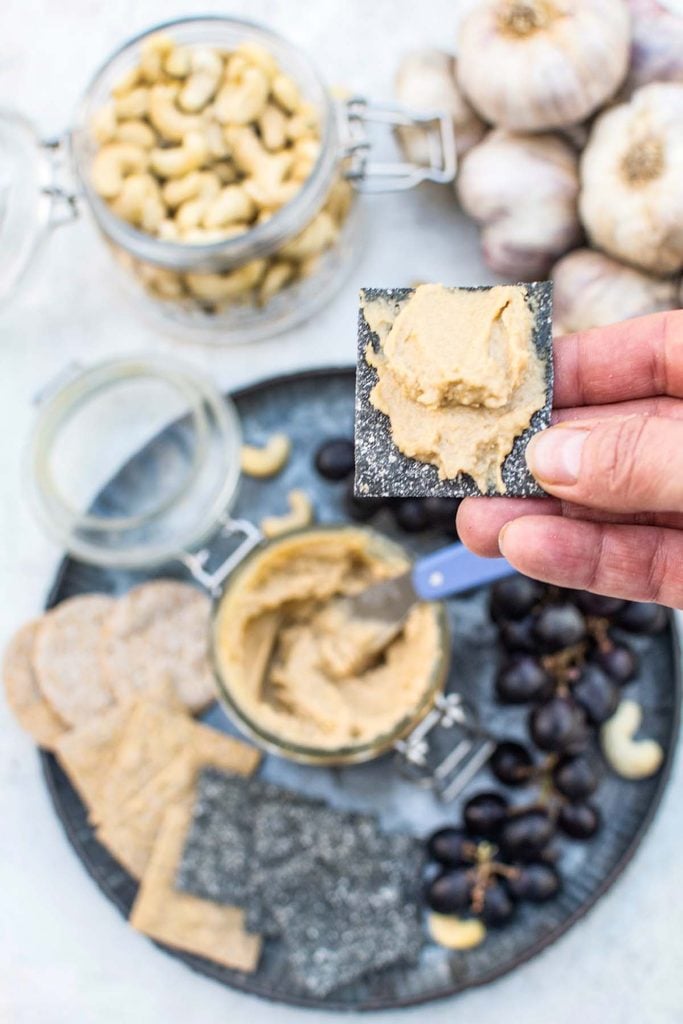
- Spreadable: as written, this is a soft, spreadable cheese. It thickens a little as it chills.
- Firmer: add 1 tbsp melted coconut oil when you blend the cashews. It sets in the fridge, so the cheese holds its shape.
- To shape it: spoon the firmer version into a muslin-lined ramekin, chill overnight, then turn it out and roll the edges in cracked black pepper or chopped herbs.
Flavour ideas and ways to use it
- Garlic and herb: stir chopped soft herbs into the finished cheese, as in my vegan garlic and herb cheese.
- Cracked black pepper, smoked paprika, or chives and lemon zest, stirred in after fermenting.
- For Christmas: shape it into my vegan Christmas cheese ball, rolled in cranberries, nuts and herbs.
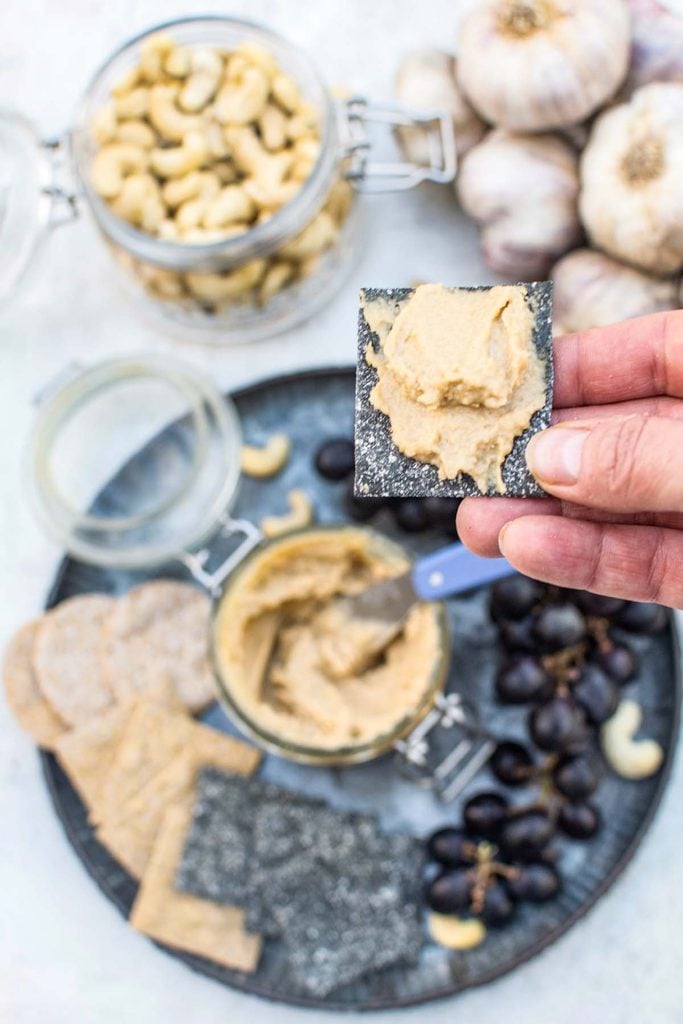
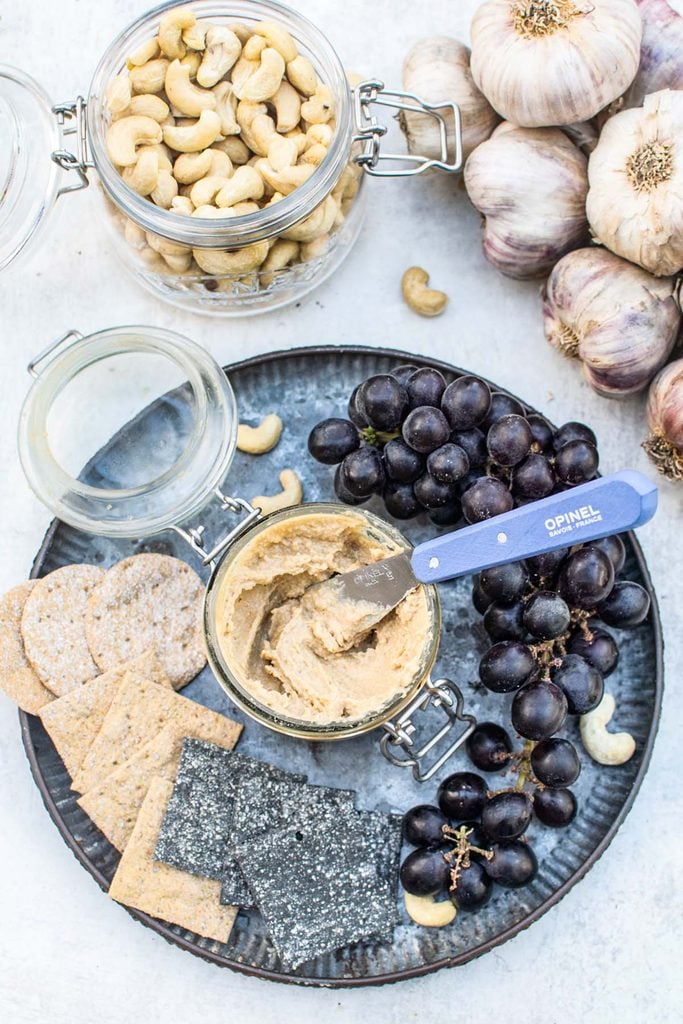
- On a cheeseboard with crackers, grapes and chutney – see my grazing boards for ideas – or crumbled over salads and roasted veg.
- With pasta: spoon it into hot pasta, then finish with a shower of cashew parmesan.
Food safety and storage
Use a clean blender and a glass jar washed in hot soapy water and dried well. Use garlic powder rather than fresh garlic, as the cheese sits at room temperature for two days. A pleasant tangy, slightly sour smell is normal. Throw it away if you see pink, orange, black or fuzzy mould, or if it smells unpleasant rather than tangy.
Once fermented, keep it in an airtight container in the fridge for up to 2 weeks (see the Food Standards Agency’s advice on how to chill food safely). Cashews are tree nuts and miso contains soya, so check the starters above if you’re cooking for someone with an allergy – and see the FSA’s food allergy and intolerance advice.
Frequently asked questions
White (shiro) miso, which is the mildest. I prefer unpasteurised miso, usually sold chilled, as it gives the liveliest ferment. For a soya-free version, use chickpea miso.
Yes. Swap the miso for chickpea miso, 1 probiotic capsules (powder only), 1 tbsp unpasteurised kimchi or sauerkraut brine, or rejuvelac. Add a little extra salt to taste.
Your kitchen is probably too cool, or your miso was pasteurised and had few live cultures. Move it somewhere warmer, such as the airing cupboard, and give it another 12–24 hours.
No – the fridge is too cold for the cultures to work. Ferment at room temperature first, then chill.
It may contain live cultures because it isn’t heated, but numbers vary, so enjoy it for the flavour rather than as a health supplement.
Yes, for up to 2 months. Defrost overnight in the fridge. The texture becomes slightly more crumbly, so it’s best for spreading or cooking rather than a cheeseboard.
Allow 2–3 days: soak and blend, ferment for 48 hours, then chill. For a Christmas Eve cheese ball, make the cheese by 21 December. It keeps for up to 2 weeks in the fridge, so you can make it earlier.
If you make this fermented cashew cheese, I’d love to see it! Leave a rating and a comment below, or tag me on Instagram @theflexitarianuk.
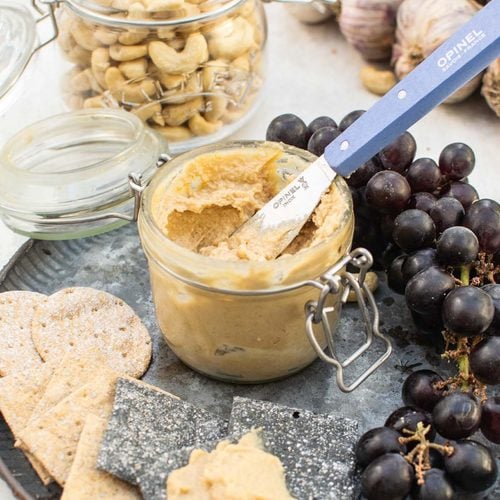
Fermented Cashew Cheese
Equipment
Disclaimer: the equipment list above includes affiliate links to products I use and like.
Watch How To Make This Recipe
Ingredients
Cheese base
- 140 g raw cashews
To finish
- 1 tsp white miso
- 1/4 tsp garlic powder adjust to taste
- 1/2 tsp fine sea salt
- 2 to 4 Tbsp water
- 2 Tbsp lemon juice
- 2 Tbsp nutritional yeast to taste
Instructions
- Soak: put the cashews in a bowl, cover with boiling water and soak for 20 minutes. Drain well.140 g raw cashews
- Blend: put the drained cashews in the blender with the miso, garlic powder, salt, lemon juice, nutritional yeast and 2 Tbsp of cold water. Blend until smooth, scraping down the sides of the bowl, then add more water, a little at a time, if needed.1 tsp white miso, 1/4 tsp garlic powder, 1/2 tsp fine sea salt, 2 to 4 Tbsp water, 2 Tbsp lemon juice, 2 Tbsp nutritional yeast
- Ferment: spoon into a clean glass jar (washed in hot soapy water and dried well). Rest the lid on loosely. Leave somewhere warm (ideally 20–25°C) and out of direct sunlight for 48 hours.
- Chill and serve: refrigerate in an airtight container for about 4 hours to firm up slighty. (see note on consistency below)
Notes
- Storage: store in an airtight container in the fridge for up to 2 weeks.
- Spreadable version: this fermented cashew cheese has a spreadable consistency. For something firmer add 1 tablespoon of melted coconut oil at Step 2.
- Cold kitchen: ferment in the airing cupboard or in the oven with only the light on, and allow the full 48 hours.
- Allergens: contains cashews (tree nuts). White miso contains soya.
Nutritional Information
Find this recipe online:
https://theflexitarian.co.uk/recipe-items/fermented-cashew-cheese/
I cannot wait to see your posts!
Other things you might like
- Grape focaccia with rosemary
- Homemade fermented vegetables
- Fermented hummus
- Kimchi fried rice with smoked tofu
- Vegan stuffed mushrooms with spinach and artichoke



Leave a Reply