

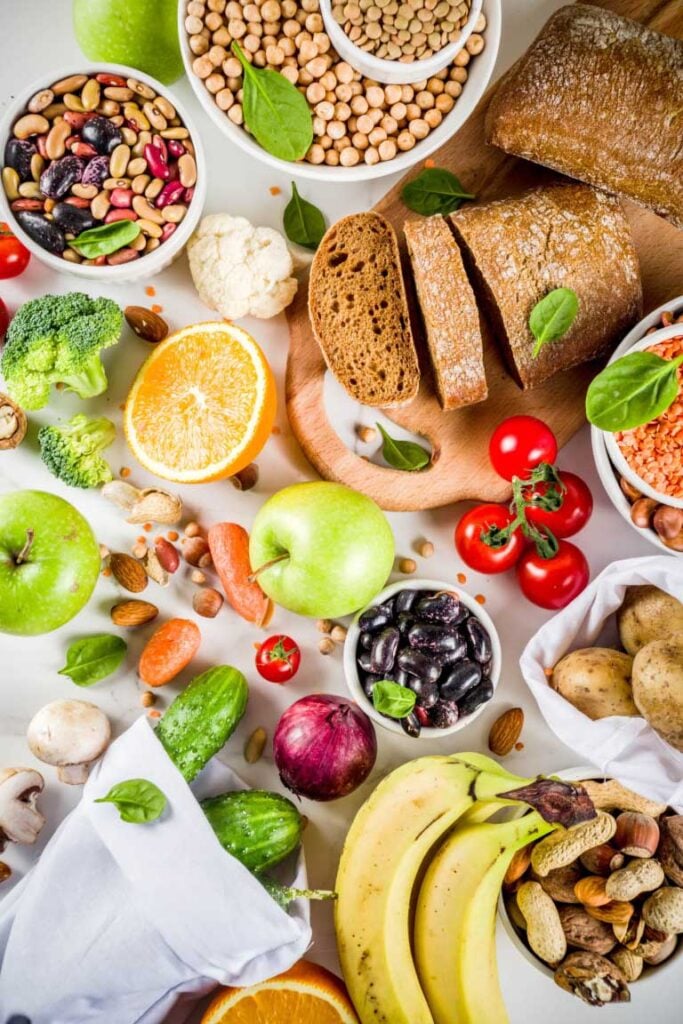
Fibre-maxxing is the practice of deliberately maximising your daily fibre intake by prioritising whole plant foods at every meal. It takes the established science of dietary fibre (reduced cholesterol, improved gut health, steady blood sugar) and turns it into an intentional daily habit. A flexitarian diet, rich in legumes, wholegrains, and vegetables, naturally makes fibre-maxxing easy.
Why Fibre Matters
Fibre has been overshadowed by other louder wellness trends (protein optimisation, gut microbiome supplements, ultra-processed food avoidance) but that’s changing. Search interest in fibre-maxxing has risen sharply in 2025 and 2026, driven by growing awareness that most of us are chronically under-eating this one humble nutrient.
The statistics are striking. According to the Food Foundation, 96% of UK adults do not eat enough fibre. The NHS recommends 30g per day; the average UK adult aged between 19 and 64 consumes just 19g while people who are over 65 years of age consume only 17.5g per day. That gap has real health consequences as low fibre intake is linked to increased risk of bowel cancer, type 2 diabetes, higher BMI, cardiovascular disease, and poor gut microbiome diversity.
Reframing fibre not as a supplement or a medical necessity, but as a positive, food-first strategy can have an enormous impact on everyone’s health. And it turns out adopting a flexitarian diet is an easy and effective way to do it.
Flexitarians vs Meat-Eaters: The Fibre Gap
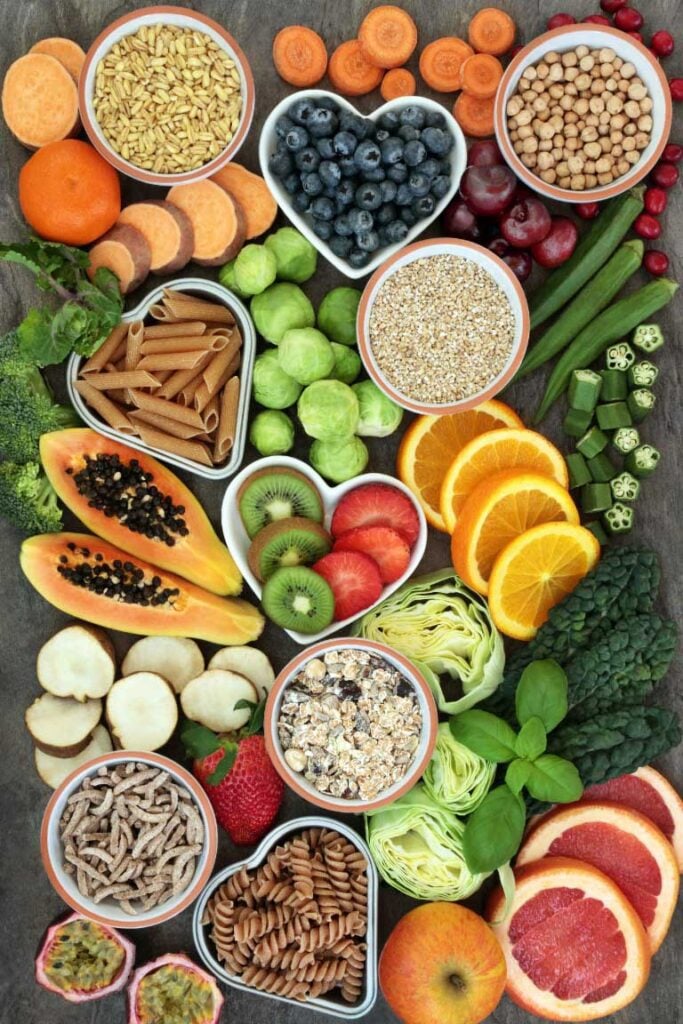
One of the most immediate benefits of eating more plants is a dramatic increase in dietary fibre. Here’s how typical flexitarian meals compare to their meat-heavy equivalents:
| Typical flexitarian meal | Fibre (g, approx.) | Typical meat-heavy meal | Fibre (g, approx.) |
| Red lentil dahl (200g) + brown rice (150g cooked) | 9.4g | Chicken tikka masala (300g) + white rice (150g cooked) | 2.2g |
| Falafel wrap: chickpeas (80g) + salad + pitta | 7.2g | Beef doner kebab + white pitta + salad | 3.5g |
| Bean chilli (200g mixed beans) + jacket potato (180g) | 16.8g | Beef chilli con carne (300g) + white rice (150g) | 3.3g |
| Edamame + veg stir-fry + wholewheat noodles (75g dry) | 12.5g | Pork stir-fry + egg noodles (75g dry) | 3.4g |
| Chickpea curry (200g) + chapatti (60g wholemeal) | 12.0g | Lamb curry (300g) + naan (120g white) | 4.2g |
Note: fibre values for individual meals vary by recipe and preparation method. The figures above should be treated as illustrative estimates not as precise analytical measurements.
Sources: McCance and Widdowson’s Composition of Foods (UK) / USDA FoodData Central.
Looking at the meals above, the pattern is clear: swapping meat for legumes can multiply the fibre content of a meal several times over. This is simply because meat contains no fibre at all. The more you replace meat with legumes, vegetables, and wholegrains, the more fibre you accumulate.
Top Flexitarian Foods for Fibre-Maxxing
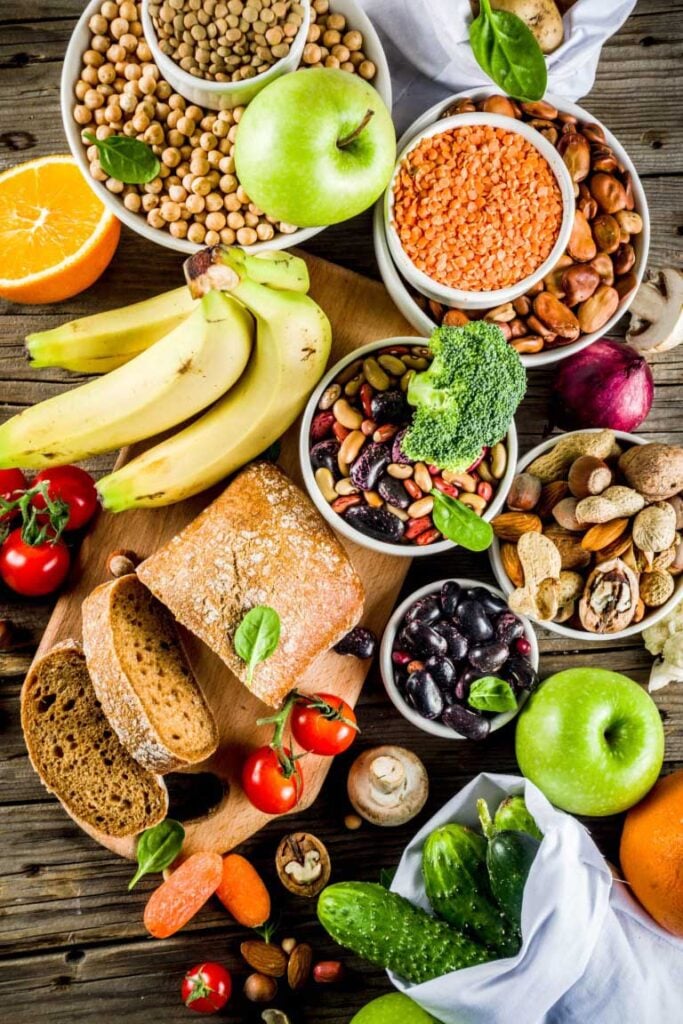
These are the some of the highest-impact, most versatile fibre sources to build flexitarian meals around:
| Food Source | Fibre per 100g |
|---|---|
| Chia seeds | 34 g |
| Flaxseed (whole) | 27 g |
| Dark rye flour | 23.8 – 30.5 g |
| Popcorn | 15 g |
| Rye crackers | 16.5 g |
| Almonds (whole) | 12.5 g |
| Oats (dry, rolled) | 10 g |
| Black beans (cooked) | 9 g |
| Lentils (cooked) | 8 g |
| Raspberries | 6.5 g |
| Peanuts | 6.3 g |
| Sunflower seeds | 6.0 g |
| Wholemeal bread | 5.8 g |
| Edamame (frozen, cooked) | 5.2 g |
| Green peas | 4.5 g |
| Whole-wheat spaghetti (cooked) | 4.5 g |
| Chickpeas (cooked) | 4.6 g |
| Brussels sprouts | 4.2 g |
| Bulgur wheat (cooked) | 3.1 g |
| Broccoli (boiled) | 3.3 g |
| Carrots | 2.8 g |
Note: fibre values for individual meals vary by recipe and preparation method.
Sources: USDA FoodData Central / Zoe
How to Actually Fibre-Maxx on a Flexitarian Diet
Good news! Fibre-maxxing doesn’t require a meal plan overhaul. These five habits will meaningfully increase your daily intake. For further inspiration of what to keep at hand, see my flexitarian pantry essentials.
1. Start with a high-fibre breakfast. Swap refined cereals for oats with chia seeds and fresh fruits, add ground flaxseed to smoothies, or try wholegrain toast with avocado. Getting 8–10g before 9am takes the pressure off the rest of the day.
2. Add legumes to everything. Tinned chickpeas, lentils, and beans are your fastest route to more fibre. Stir them into soups, curries, pasta sauces, mash them into sandwich fillings and add them to salads. A 200g serving of black beans adds around 18g of fibre in one go.
3. Go wholegrain by default. Wholemeal bread, brown rice, wholewheat pasta, and oats all significantly outperform their refined equivalents for fibre content. The taste difference is minimal; the fibre difference is substantial.
4. Keep the skins on. The skin of vegetables and fruit contains a significant proportion of their fibre. Roast potatoes unpeeled, leave the skin on courgettes, and eat apples rather than drinking apple juice.
5. Snack on plants. Hummus and vegetable crudités, a handful of edamame, air fryer chickpeas or a small bowl of mixed nuts and dried fruits all count. Snacking is where most people’s fibre totals are won or lost.
One important note: if you’re dramatically increasing fibre intake, do it gradually over two to three weeks and drink plenty of water. A sudden spike can cause bloating and discomfort as your gut microbiome adjusts, the opposite of the effect you’re after.
6 Flexitarian Recipes to Help You Fibre-Maxx
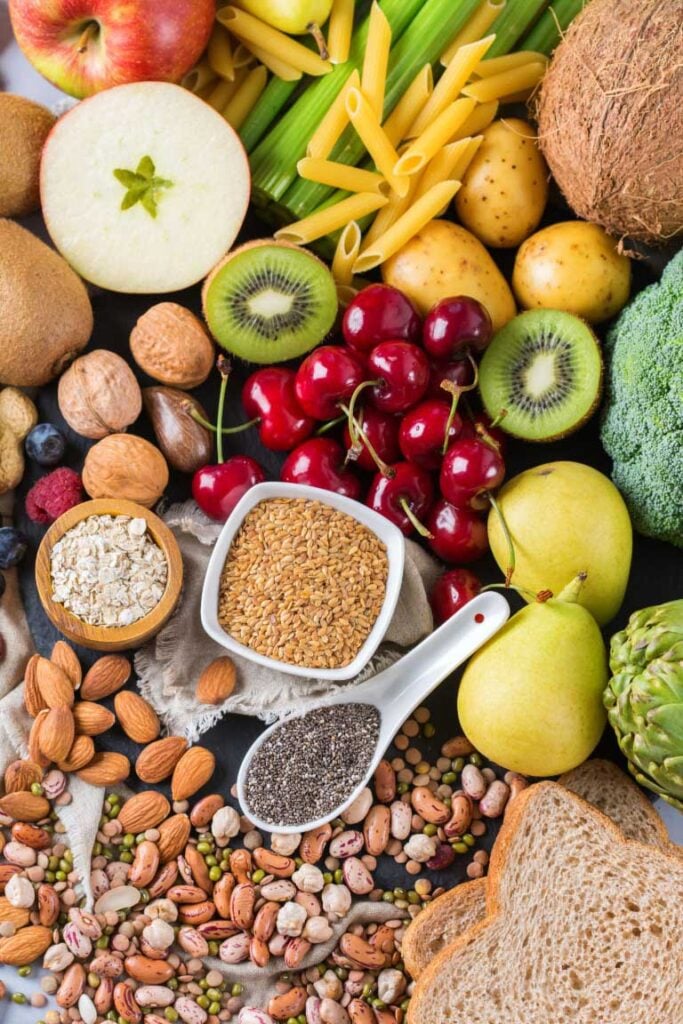
Here is a handpicked selection of recipes that are naturally high in fibre from my collection of high-fibre recipes
1. Baked Berry Oatmeal
Oats and fruits are one of the easiest ways to load up on fibre intake before 9am. This baked version combines jumbo oats with mixed berries and bakes them into a warm, sliceable breakfast (around 4g fibre per serving before you’ve even made your coffee). Make it on Sunday and you’ve got fibre-maxxing breakfasts sorted for the week.

2. Grilled Avocado Buddha Bowl
This bowl is fibre-maxxing in a single serving. Avocado, edamame, brown rice, and pickled vegetables combine to deliver an estimated 14g+ of fibre, nearly half the NHS daily target in one meal.

3. Sweet Potato & Black Bean Mexican Casserole
Black beans are one of the most fibre-dense ingredients you can cook with, delivering around 9g per 100g. Paired with sweet potato (another strong fibre source) this Mexican-spiced casserole is a fibre-maxxing powerhouse in a single pot. Batch-cook it on a Sunday and your weekday lunches are sorted.
![Sweet Potato & Black Bean Mexican Casserole [vegetarian] by The Flexitarian](https://theflexitarian.co.uk/wp-content/uploads/2016/09/Sweet-Potato-Black-Bean-Mexican-Casserole-vegetarian-by-The-Flexitarian-v800.jpg)
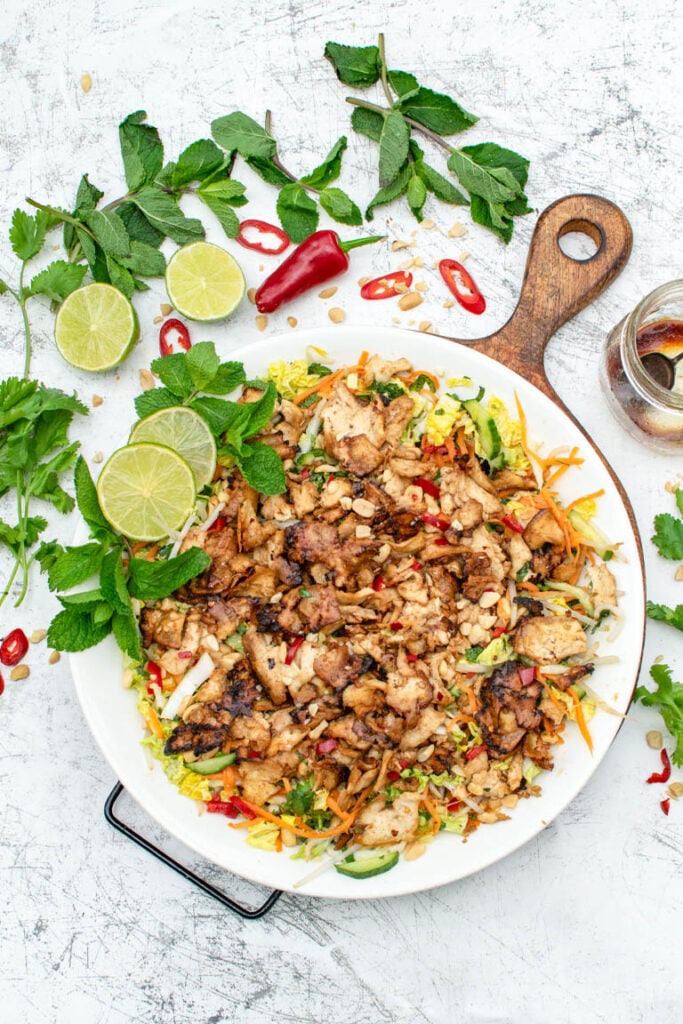
4. Vietnamese-Inspired Salad with Baked Tofu
Proof that fibre-maxxing doesn’t have to mean heavy bowls and stews. This bright, herb-forward salad packs in fibre through sheer vegetable volume: crunchy leaves, fresh herbs, and a punchy dressing alongside baked tofu for protein. Light on effort, high on plants.
5. Chickpea Salad
Chickpeas deliver around 9g of fibre per 200g serving, making them one of the most efficient fibre-maxxing ingredients you can throw together at speed. This salad needs no cooking and comes together in minutes, the kind of lunch that quietly adds a significant chunk towards your 30g daily target without any effort.

6. Red Lentil Curry with Sweet Potatoes
Red lentils are a fibre-maxxer’s best friend: cheap, fast-cooking, and delivering around 6.6g of fibre per 200g serving. Combined with sweet potato, this warming curry is a fibre-dense meal.

FAQ: Your Fibre Questions Answered
The NHS recommends 30g of dietary fibre per day for adults. Children need less: 15g for ages 2–5, 20g for ages 5–11, and 25g for ages 11–16
Legumes (particularly black beans, lentils, and chickpeas) are among the most fibre-dense foods per portion. Black beans provide around 15g of fibre per 200g serving (cooked), making them one of the most efficient single ingredients for fibre-maxxing. Wholegrains, avocados, edamame, and vegetables like broccoli and peas are also excellent sources.
Largely, yes. Dietary fibre is found exclusively in plant foods: fruits, vegetables, wholegrains, legumes, nuts, and seeds. Animal products (meat, fish, dairy, eggs) contain no fibre. So the most effective fibre-maxxing strategy is simply eating more plants, which is exactly what a flexitarian diet prioritises.
For most healthy adults, eating significantly more than 30g per day is not harmful. However, rapidly increasing fibre from a very low baseline can cause temporary bloating, gas, and digestive discomfort. Introduce high-fibre foods gradually and stay well hydrated to avoid this.
Cooking can soften the structure of some fibres, which may reduce certain types of resistant starch. However, total fibre content is largely preserved through most cooking methods. Steaming and roasting tend to retain more fibre than boiling, where some soluble fibre can leach into the cooking water.



Leave a Reply